Tinder photo guide
Best Tinder profile photos for men: examples, order and checks
Guidance checked 4 September 2026 · by Muskan Singh · Editorial method
Quick answer. Start with a current solo photo in which your full face is easy to recognise on a phone. Build the rest of the set around different, truthful jobs: body and style, an activity, an everyday setting, and one social or personal detail. Use only as many photos as can add new information. Remove repetitions, misleading edits and any frame that makes a stranger guess which person is you.
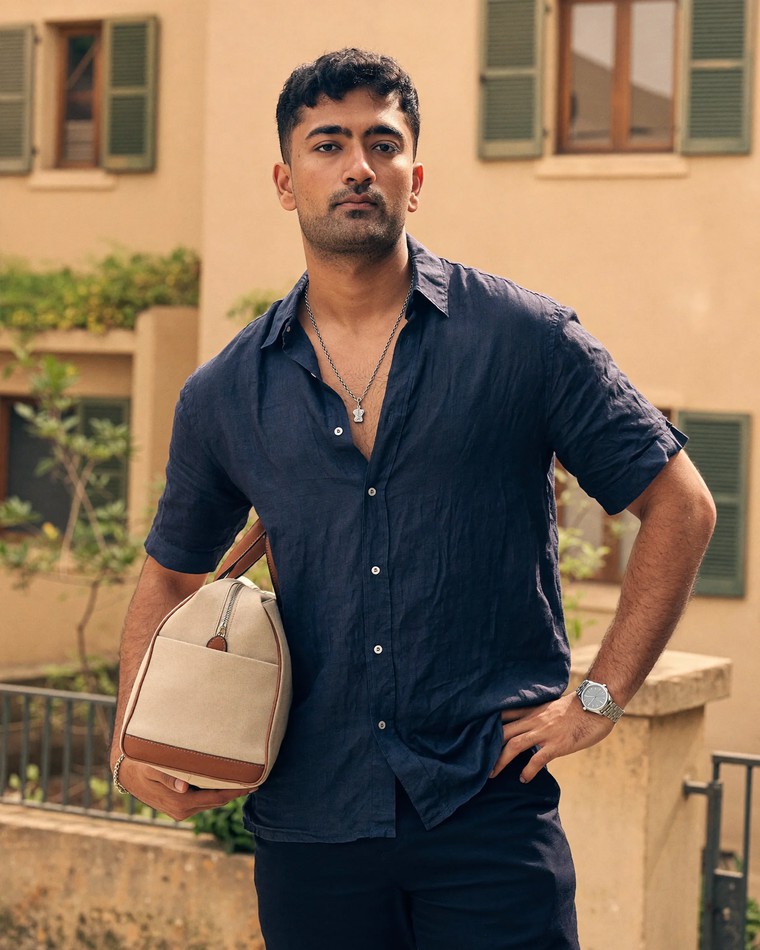
Run the one-second Tinder opener test
View the first photo at phone-card size for one second, then hide it. Answer these questions without zooming.
- Identity: could you describe the correct person immediately?
- Face: were the eyes and expression readable?
- Recency: does it match how you look now?
- Crop: would a tighter screen crop keep the head and shoulders safe?
- Difference: do the remaining photos each add a new fact?
Decision rule: if identity, face or recency fails, replace the opener. If two later photos repeat the same crop, outfit, expression and setting, keep the clearer one. This is a Matchframe editorial test, not a claimed Tinder ranking formula.
What matters most in a men's Tinder photo set?
The set must answer three questions without forcing the viewer to investigate: who is this person, what do they look like now, and what would spending time with them plausibly involve? The opening photo carries the recognition job. The later photos should add evidence about current appearance and life rather than repeat the same portrait in different clothes.
Tinder's current Photo Tips guidance supports thinking about the upload as one set. In select markets, the feature reviews variety across activities, settings and poses, notices similar photos and may suggest adding or replacing a type of image. It can use profile details such as a bio and Interests to make a suggestion more relevant. Tinder does not say this is its ranking formula, so treat variety as a communication goal, not an algorithm trick.
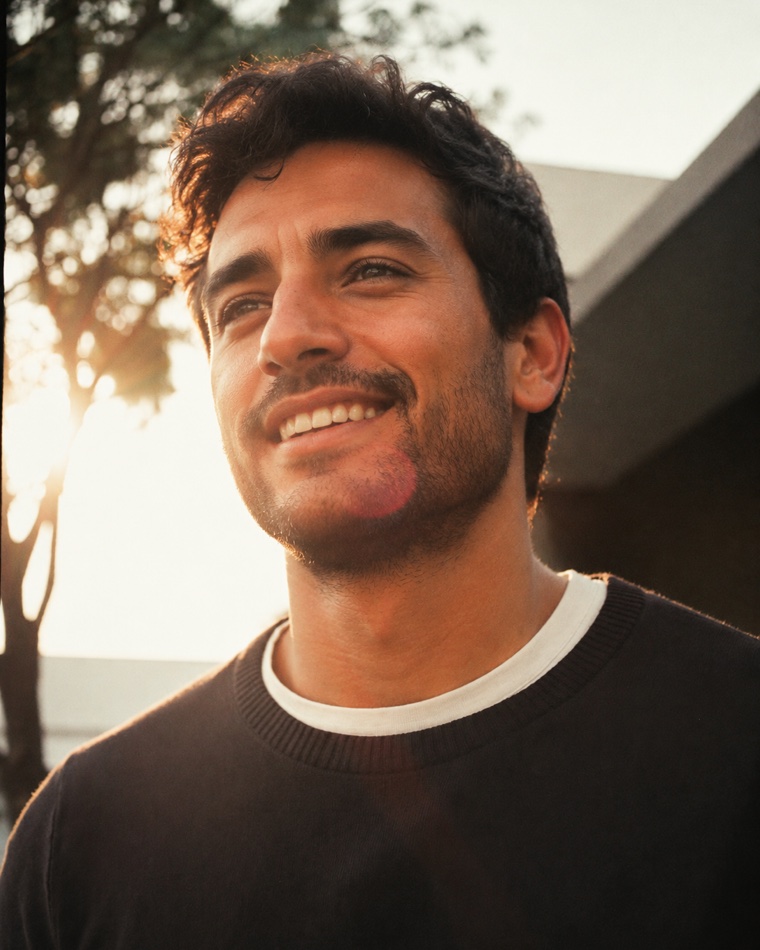
Use the recognition, information and integrity test
Score every candidate on three independent jobs. A supporting photo can be weaker on recognition than the opener, but it cannot become unrecognisable or misleading.
| Test | Question | Pass condition | Common failure |
|---|---|---|---|
| Recognition | Can a new person identify me at card size? | Current face, visible eyes, useful light and one obvious subject | Distance, sunglasses, blur, old appearance or group ambiguity |
| Information | Does this add something the earlier photos do not? | A new view of body, style, activity, routine, setting or expression | Another selfie, outfit change with the same pose, or empty scenery |
| Integrity | Would I explain every visible detail honestly? | Real identity, plausible context, permission and no invented status | False location, borrowed pet, altered body, cropped-out person or private detail |
A polished photograph that fails integrity should not be uploaded. A truthful photo that fails recognition may still work later after a safer crop, but it should not lead. Use the dating-app crop guide to test the actual phone-sized version rather than judging only the full file.
What should the first Tinder photo be?
Use a recent solo portrait or close three-quarter frame. The full face should be visible, the eyes should not be hidden, focus should land on the face, and the crop should leave enough room for different app surfaces. A plain background is not required; it only needs to stop competing with the person.
Tinder says profiles may be hidden in many regions when it cannot detect a valid face photo. Its public help page recommends a clear view of the full face, good light and a close crop, while noting that the requirement is still rolling out and exceptions can apply. That is a visibility requirement, not evidence that every close-up ranks higher.
| Gate | Pass it when | Reject or repair when |
|---|---|---|
| Current | Your hair, facial hair, age and body presentation match today | The image represents an older version people would notice in person |
| Solo | No one must compare faces to find you | Another person, pet or large prop becomes the subject |
| Visible | The complete face and eyes remain readable after resizing | A hand, phone, shadow, hat or glasses blocks recognition |
| Natural | Expression, skin texture and proportions still look like you | Retouching changes identity or makes the frame look synthetic |
| Safe crop | The head and shoulders survive centre and portrait crops | The forehead, chin or important context sits against the edge |
A beach, sport, travel or event frame can be excellent later and still be a weak opener if the face occupies too little of the card. Compare two finalists using the first-photo pairwise test and choose the one a stranger can understand faster.
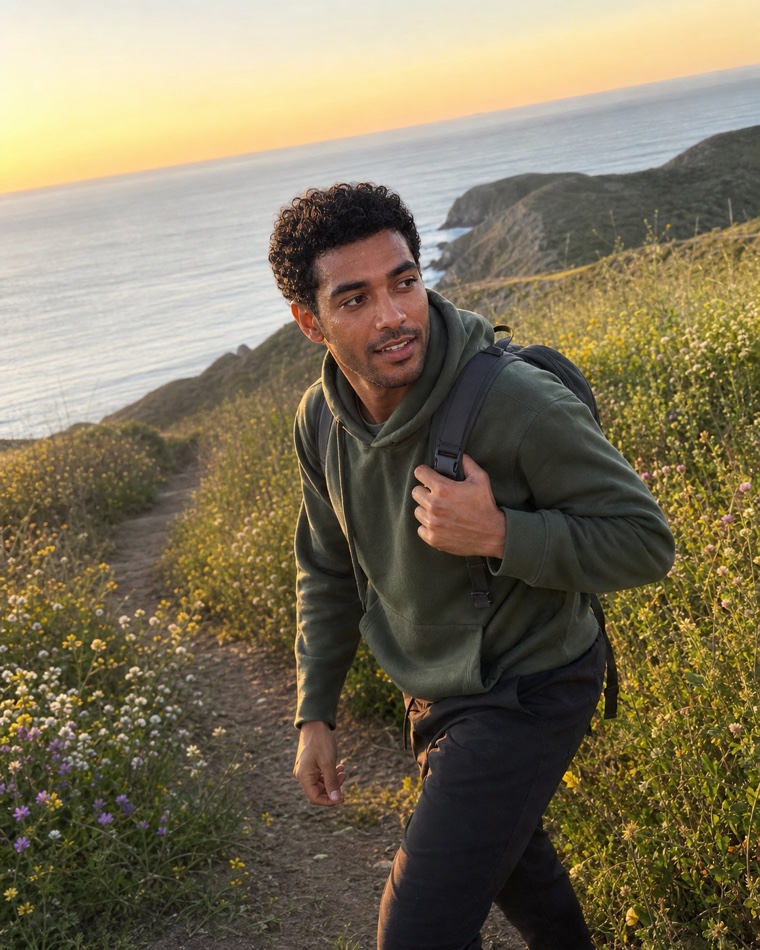
Can men use selfies on Tinder?
Yes. A selfie can work when it is recent, sharp, undistorted and clearly shows your face. It becomes a weak choice when a very close front camera stretches the face, the phone covers important features, a mirror exposes private details, or the whole profile repeats the same arm-length crop.
Judge the photograph by its job, not by the word “selfie.” Keep one if it is your clearest current portrait. For the rest of the set, use the rear camera, a timer or a friend so later frames can add body, activity and everyday context. The solo dating-photo workflow explains the distance, support and burst method without requiring a professional photographer.
How many Tinder photos should men use?
There is no permanent universal ideal count in the current Tinder help pages reviewed for this guide. Tinder's Photo Tips may recommend adding a certain number or type for one person's set, but that personalised suggestion is not a public rule for everyone. Treat four to six distinct roles as an editorial planning range, not an official minimum, optimum or ranking factor.
Start with the strongest four different roles. Add a fifth or sixth only if it answers a new question and passes the three tests above. Do not keep a weak photo because a competitor says every slot must be filled. Use the remove-one photo-count test: hide one image, then ask what truthful information disappears. If the answer is “nothing,” the image has not earned its place.
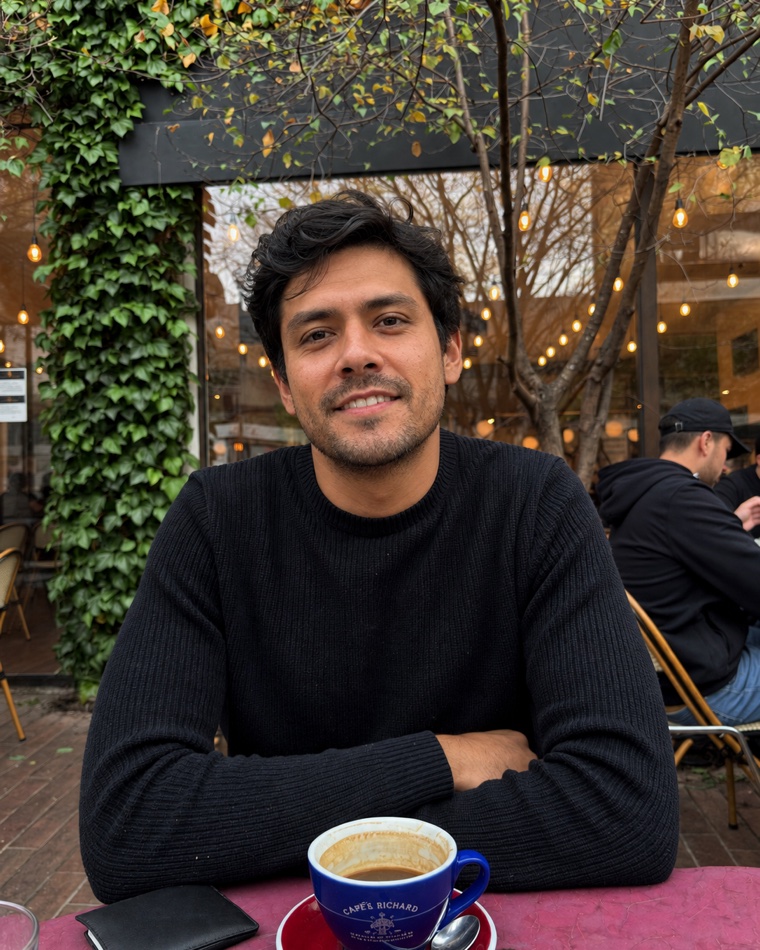
What order should Tinder profile photos use?
No reviewed official page establishes one winning order. This flexible map keeps recognition first and lets later roles move according to the person's strongest real material.
| Role | Main job | Pass condition | Do not use it to imply |
|---|---|---|---|
| 1. Clear opener | Recognition | Solo, current, bright enough and easy to read on a phone | That a studio portrait describes your everyday life |
| 2. Body and style | Complete appearance | A natural three-quarter or full-length view with honest proportions | A different height, build or wardrobe from reality |
| 3. Real activity | Interest and movement | You genuinely do it and remain identifiable | A hobby, skill or level of fitness you do not have |
| 4. Everyday setting | Present-life context | A believable weekend, neighbourhood, cafe or home moment | Ownership of a venue, house, car or luxury item |
| 5. Social or warm detail | Relationship context | You remain obvious and every person shown has consented | That a stranger, ex, child or borrowed pet belongs in your profile |
| 6. Distinctive remainder | One new fact | A different expression, occasion, place or story worth explaining | That more photos automatically mean more matches |
If the activity image is your clearest body-and-style frame, it can take the second role. If a social photo adds little, leave it out. The roles are a coverage check, not a rigid recipe.
What does Tinder Photo Selector actually do?
Photo Selector is a global Android and iOS tool that looks through a permitted camera roll on the device. Tinder says it uses a selfie or existing face photo to identify pictures of the user, then considers qualities such as lighting and composition. It filters group photos and images that appear to violate Tinder's terms or guidelines from its suggestions. The user chooses what to upload.
Tinder says the camera-roll scan, face comparison and temporary biometric data for this feature remain on the device, and the biometric data is deleted when the user exits the feature. Tinder receives the images the user ultimately uploads. This privacy description belongs specifically to Photo Selector; do not assume all Tinder photo features process data in exactly the same way.
The group-photo filter is also a tool boundary, not a public ban on every social photo. If you include one later, make yourself immediately identifiable, confirm permission and check the background for private information.
How are Photo Tips and Photo Insights different?
Photo Tips reviews photos already on the profile as a set and may suggest more variety or fewer similar images. Photo Insights is a separate opt-in feature in select markets. It analyses patterns in a permitted camera roll to generate short descriptions of possible interests, personality or lifestyle and may suggest photos, interests, About Me topics and prompts. Nothing is added unless the user chooses it.
| Feature | Material considered | What it can suggest | Limit to remember |
|---|---|---|---|
| Photo Selector | Permitted camera roll, processed on device | Existing images that might work as profile photos | Excludes group photos from recommendations and does not verify truth or recency |
| Photo Tips | Current profile photos plus relevant profile details | Add or replace a type of photo; reduce repetition | Select markets; advice can be dismissed and is not a ranking disclosure |
| Photo Insights | Opted-in camera roll patterns and selected temporary uploads | Photos, collages, interests and profile topics | Select markets; automated interpretations can be inaccurate or sensitive |
For Photo Insights, Tinder says the initial scan happens on device, while select photos can be temporarily uploaded to Tinder and shared with its AI technology provider to create insights and suggestions. The public page describes deletion and retention differently according to what the user keeps and the market. It also warns that the system is not perfectly accurate and may misread sensitive themes. Read those controls before granting camera-roll access; a useful suggestion is not automatically a true description of you.
How should men use group, pet and activity photos?
Use each only when it belongs to the present life being represented. A group photo needs consent, immediate identification and a reason to exist beyond “social proof.” A pet photo needs truthful ownership or context; if it is someone else's animal, the caption or profile should not imply otherwise. An activity photo should show something you can discuss honestly rather than a borrowed prop or staged achievement.
Keep the person large enough to recognise. A panoramic mountain shot where the subject is a few pixels tall is mostly a landscape. A football or gym frame where motion destroys the face may show activity but cannot replace a current portrait. The group-photo guide, pet-photo honesty check and context-first body-photo guide cover those edge cases in detail.
What editing is safe, and what changes the story?
Tinder's current Photo Enhance feature, available in select markets, is described as technical improvement: sharpening blur, adjusting brightness or exposure and improving clarity. Tinder says it is not designed to add or remove people, objects or backgrounds, apply cosmetic effects, or change facial features or skin-tone appearance. If a user saves the enhanced version, Tinder says it retains both the enhanced and original images so the change can be reversed.
Use the same boundary outside Tinder. Correcting exposure or a slight colour cast can make an existing truth easier to see. Rebuilding a jaw, body, hairline, skin tone, background, activity or luxury context changes what the photograph claims. If the original face is motion-blurred or too small, replacement is usually safer than aggressive repair.
Can AI-generated photos be used on Tinder?
An AI-generated photograph should pass a stricter release test than an ordinary edit. It must preserve current identity, age, body proportions and recognisable features. The clothing, place, activity, people, pet and possessions must be plausible and explainable. Inspect hands, teeth, glasses, jewellery, text, mirrors, shadows and repeated background shapes at full resolution.
Do not use verification as a loophole. Tinder's optional ID + Photo Verification compares a live video selfie, profile photos and an identity document in supported test markets. Tinder explicitly says the badge does not guarantee the validity of an ID or the safety of a person. Passing a face comparison would not turn an invented trip, profession, vehicle or relationship into a true claim.
Use the full AI dating-photo authenticity checklist. If a friend who saw you this week hesitates to recognise you, or if the scene would require a misleading explanation, reject the image.
How should Tinder photos be cropped and checked on a phone?
Do not rely on a permanent pixel ratio copied from an old blog. Tinder's current public Photo Tips and Photo Enhance pages do not publish one universal upload or display ratio. App surfaces, devices and previews can change. Export a high-quality master with safe space around the head and body, then inspect the actual preview on the device you use.
- Open the candidate at roughly the size it will appear in the card.
- Check that the full face remains visible without zooming.
- Preview a centre crop and a taller crop; important information should survive both.
- Make sure no edge cuts the forehead, chin, hand, shoe, pet's face or activity prop awkwardly.
- Inspect the background for addresses, number plates, work badges, screens and other people's private information.
Save the original separately. A reversible crop is easier to correct when an app changes presentation than a file already cut too tightly.
What should you change when a Tinder profile is quiet?
First separate visibility from persuasion. Confirm Discovery is enabled, the profile is not paused or hidden, preferences are not unintentionally narrow and the account shows a valid face photo where Tinder requires one. Those are account and eligibility checks, not proof of a “shadowban.”
Next audit the opener at card size. Replace only the weakest high-impact variable: an unrecognisable first photo, an outdated likeness, or a set of duplicates. Keep the rest stable long enough to observe normal use. Do not simultaneously change all photos, bio, Interests, location and preferences, because any difference becomes impossible to attribute.
Even a careful comparison cannot prove that one photo caused a match change. Audience composition, location, activity, timing, preferences and Tinder's systems also vary. Use the no-matches diagnostic for the complete decision tree and contact Tinder support when an official account problem persists.
Run this 15-minute Tinder photo audit
| Minutes | Action | Keep or change when |
|---|---|---|
| 0–3 | View the opener at phone-card size | Change it if identity, eyes, focus or current likeness is unclear |
| 3–6 | Label each remaining photo by its unique job | Remove a duplicate when two frames provide the same information |
| 6–9 | Check dates, people, places and props | Reject anything outdated, private, unpermitted or misleading |
| 9–12 | Inspect crop, full resolution and small preview | Repair only reversible technical problems; reject identity changes |
| 12–15 | Ask one trusted person two neutral questions | Keep when they identify you instantly and describe the intended true context |
Do not ask “Do I look attractive?” first. Ask “Which person is this?” and “What does this photograph make you believe about my current life?” Those questions test recognition and meaning without asking a friend to predict strangers or promise an outcome.
Which popular Tinder-photo claims should you ignore?
Current competitor guides commonly present fixed five- or six-photo recipes, precise first-photo percentages, guaranteed multipliers, mandatory update schedules and claims that one set is “adapted to the algorithm.” Some publish internal totals without exposing sampling, selection, controls, time windows or complete outcome definitions. Those figures may describe a company's own experience, but they are not automatically general Tinder facts.
| Popular claim | Why it is too strong | Safer decision |
|---|---|---|
| “Exactly five or six photos is optimal” | No current reviewed Tinder page publishes one universal optimum | Use distinct roles and remove any image that adds nothing |
| “The opener controls a precise percentage of swipes” | The public methodology is usually absent or mixed with general first-impression research | Make the opener clear because it is encountered first, without inventing a percentage |
| “One formula gets three or eight times more matches” | Self-selected customer outcomes cannot isolate the photos or guarantee a new user result | Improve recognisability, truth and coverage; describe outcomes only with a disclosed study |
| “Passing verification proves an AI photo is safe” | Verification checks identity-related signals, not every claim inside a scene | Run a separate identity, context, consent and artefact audit |
| “A quiet profile means a shadowban” | Low activity has many possible account, preference, market and presentation causes | Check official visibility settings and valid-face requirements before diagnosing photos |
Complete the final Tinder photo checklist
- The first photo is current, solo and recognisable at phone-card size.
- The full face and eyes remain clear without zooming.
- Every later image adds a different truthful fact.
- The set includes body and present-life context without forced filler.
- All people shown have agreed to public use.
- Pets, places, activities, clothing and possessions are represented honestly.
- No crop exposes private information or leaves a misleading remnant of another person.
- Editing improves visibility without changing identity, body or biography.
- AI-generated frames pass identity, context, consent and artefact checks.
- Official Tinder tools are treated as optional aids, not ranking guarantees.
After the checklist, compare the set with the natural pose guide, men's wardrobe guide and photo-role planner. Change the smallest failing part first.
Sources and evidence limits
- Tinder Photo Selector, updated 7 August 2026 and checked 9 September 2026. Used for current on-device operation, selection inputs, group-photo filtering, user choice and privacy; not a ranking disclosure or outcome study.
- Tinder Photo Tips, updated 26 August 2026 and checked 4 September 2026. Used for set-level variety and similarity guidance in select markets; not proof that a photo formula causes matches.
- Tinder Photo Insights, updated 11 August 2026 and checked 4 September 2026. Used for opt-in operation, suggestions, limitations, data flow and controls in select markets; not proof that an inferred theme is accurate.
- Tinder Photo Enhance, updated 15 June 2026 and checked 4 September 2026. Used for technical-enhancement and authenticity boundaries; not permission to create a false scene.
- Tinder: My profile is hidden, updated 6 June 2024 and checked 4 September 2026. Used for the valid-face-photo visibility requirement in many regions and its stated exceptions; not a ranking formula or individual diagnosis.
- Tinder ID + Photo Verification, updated 16 April 2026 and checked 4 September 2026. Used for the optional verification scope and its explicit safety limitation; not approval of every fact depicted in a profile image.
- Tinder Community Guidelines, checked 4 September 2026. Used for consent, sexual-content and personal-information boundaries; not a prediction of moderation or engagement.
Frequently asked questions
What should a man's first Tinder photo be?
Use a recent solo portrait or close three-quarter frame. The complete face and eyes should remain clear at phone-card size, with useful light, accurate identity and enough space for different crops.
How many Tinder photos should men use?
Tinder's current public guidance does not state one universal ideal count. Start with four distinct strong roles and add a fifth or sixth only when it contributes new, truthful information; this is an editorial workflow, not an official optimum.
What order should Tinder photos use?
Lead with recognition, then add body and style, a real activity, an everyday setting and an optional social or personal detail. The later roles can move; no reviewed official Tinder page establishes one winning fixed order.
Should men use group photos on Tinder?
A group photo can add truthful context later, but do not lead with one. Make yourself immediately identifiable, obtain permission from everyone shown and check the background for private information.
Can men use selfies on Tinder?
Yes. Keep a selfie when it is current, sharp, undistorted and your clearest portrait. Avoid filling the profile with arm-length photos because they repeat the same crop and add little body, activity or everyday context.
What is the difference between Tinder Photo Selector and Photo Tips?
Photo Selector scans a permitted camera roll on the device and suggests existing solo photos. Photo Tips reviews the uploaded profile set for variety and similarity in select markets. Neither feature is a public ranking formula.
What does Tinder Photo Insights do?
Photo Insights is an opt-in feature in select markets that analyses camera-roll patterns and can suggest photos, interests and profile topics. Tinder warns that automated interpretations can be inaccurate, and nothing is added without the user's choice.
Can Tinder Photo Enhance change how someone looks?
Tinder describes Photo Enhance as improving technical quality such as sharpness, brightness and exposure. It says the tool is not designed to change facial features or skin tone, add or remove people or objects, replace backgrounds or apply cosmetic effects.
Can men use AI-generated photos on Tinder?
Use an AI-generated photo only when it preserves current identity and body proportions and every visible place, activity, person, pet and possession can be represented honestly. Passing verification does not validate every claim in a scene.
What should I check if my Tinder profile is quiet?
First confirm Discovery and account visibility, preferences and any valid-face-photo requirement. Then change one high-impact photo problem at a time. Quiet activity alone does not prove a shadowban or identify the photos as the only cause.
Build a truthful photo library before choosing the order
Matchframe creates varied dating-photo options from one current identity, ready for you to crop, inspect and arrange without a promised match outcome.
Open MatchframeAlso worth reading
- Hinge profile photos for men
Four to six roles, prompt pairing, Top Photo and truth checks - Bumble profile photos for men
Four to six roles, Best Photo limits, prompts and truth checks - Matchframe vs DatePhotos.AI
Price, output, delivery, refunds and data retention - Choose the best first dating-app photo
Five rejection gates and a pairwise phone-size chooser