Profile diagnosis
No matches on dating apps as a man? Diagnose the cause first.
Updated and sources checked 4 September 2026 · by Joseph Mexatas · Editorial method
No matches does not prove that you are unattractive, shadowbanned or using the wrong first photo. It is one result with several possible causes: your profile may be hidden, the available pool may be narrow, the profile may not give people enough reason to choose it, or a technical or content requirement may be incomplete. The count alone does not reveal the cause. Check those branches in that order before paying, resetting or replacing everything.
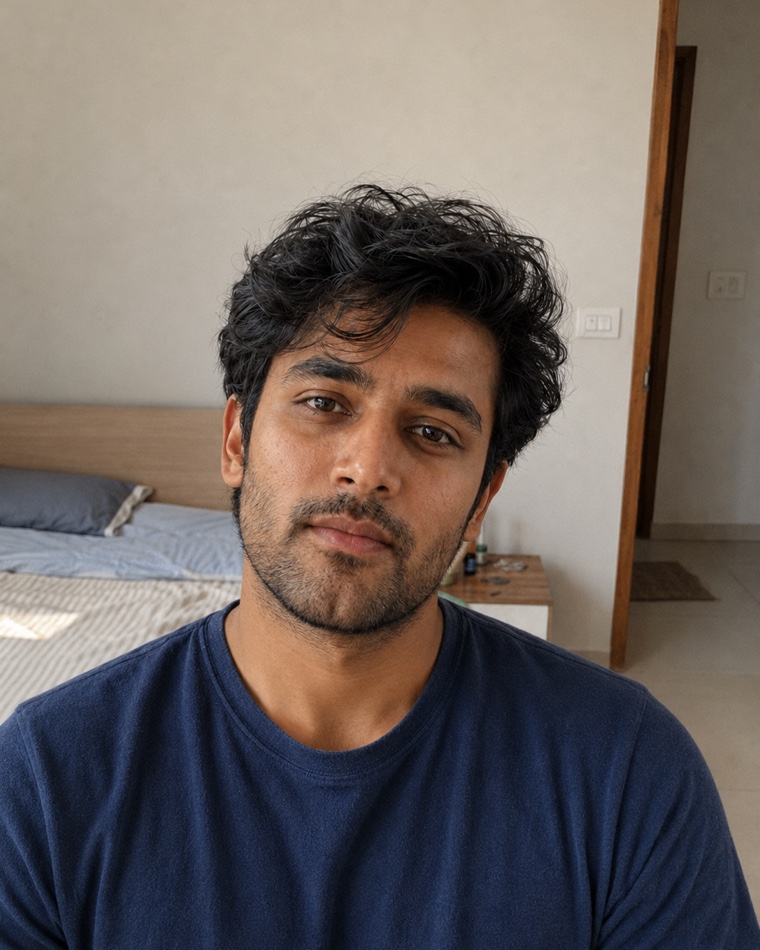
Start with the four-branch diagnosis
| What you can observe | What it may mean | First check | What it does not prove |
|---|---|---|---|
| The app says the profile is paused, hidden or incomplete | A visibility or content requirement is blocking new discovery | Follow the app's own notice and restore the missing requirement | That your photos are unattractive |
| You see very few suitable profiles | The local pool or your filters may be narrow | Review distance, age and hard dealbreakers without changing genuine needs | That the account is secretly suppressed |
| You can use the app normally but receive no matches | Exposure, fit and profile response are all still possible causes | Audit the opener, photo roles and prompts | Which cause is responsible; most apps do not show ordinary impression data |
| Matches form but conversations do not start | The bottleneck moved beyond matching | Review what your photos and prompts give someone to respond to | That another portrait will solve the conversation |
| Results stopped suddenly alongside missing features or a warning | A technical, moderation or account issue may exist | Read the notice, update the app and use official support | A “shadowban” based only on a quiet week |
This table is a diagnostic map, not a hidden-algorithm detector. Tinder, Hinge and Bumble do not give Matchframe access to an individual account's impressions, ranking or moderation record. When that evidence is absent, the honest answer is “not yet known,” not a confident story about the algorithm.
Step 1: confirm the profile is eligible to be shown
Open the app and look for a pause, snooze, hidden-profile, removed-content or completion notice. This is the only branch where a published app rule can explain zero discovery directly.
| App | Current official check | Action |
|---|---|---|
| Tinder | Discovery must be enabled for the profile to be shown to new people. Tinder also says profiles can be hidden when it cannot detect a valid face photo in regions where that requirement applies. | Turn on Discovery. If Tinder says the profile is hidden, add a well-lit, unobscured face photo; contact support if a compliant photo is still rejected. |
| Hinge | A paused profile is not shown to new people. Hinge also says removed content may need replacement before the profile reappears in Discover or Standouts. | Turn Pause off and respond to any removal banner or email. Replace or appeal the exact item through Hinge's stated flow. |
| Bumble | Snooze hides the profile from new matches. Incognito shows the profile only to people you choose first. | Turn Snooze off. If using Incognito, remember that people you have not liked will not see you. |
Do not infer a platform problem from silence alone. A real notice, missing requirement or disabled discovery control is evidence. “I received no matches” is not enough evidence to distinguish low exposure from low response.
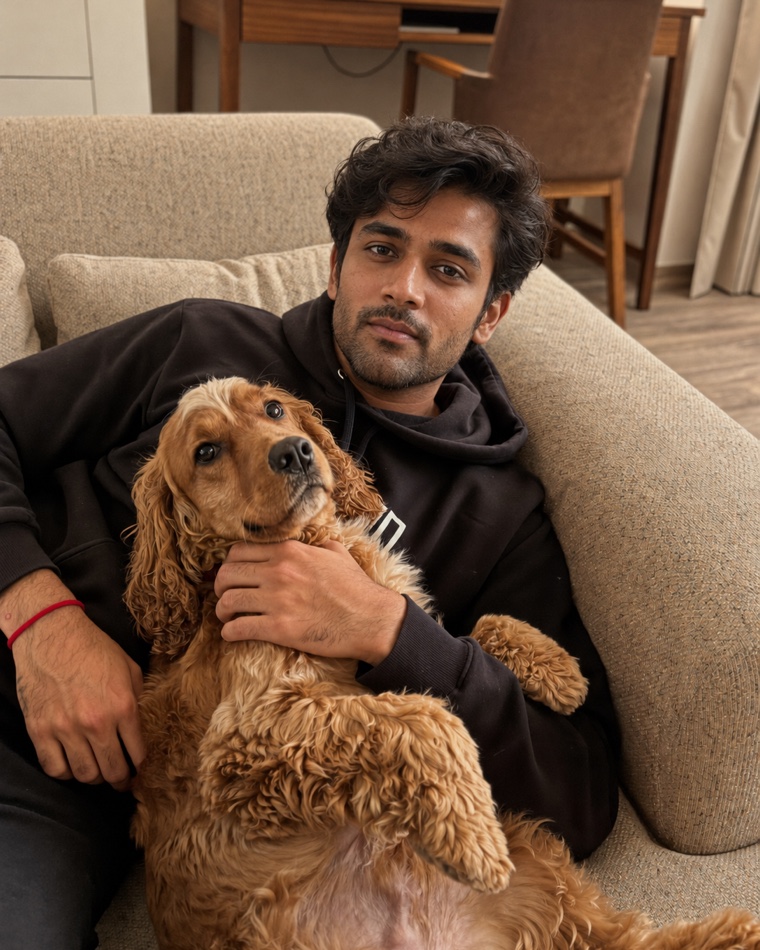
Step 2: check whether the pool is too narrow
Review the settings you control: location permission, distance, age range, gender or orientation settings and hard dealbreakers. Hinge says flexible preference settings can allow more profiles to be seen in both directions. Tinder says it may offer people just outside age or distance preferences after nearby recommendations run out. Bumble advises that even small age or distance changes can introduce more people.
Widen only a preference that is genuinely flexible. Do not change your identity, relationship intention or important boundary merely to create a larger number. A larger pool is not automatically a better pool.
Step 3: test the first photo at actual card size
The opener has one job: make recognition easy enough that someone can consider the rest of the profile. Preview it inside the app or shrink it to roughly the size of a phone card. Then ask:
- Is there one obvious subject?
- Can I see the current face, eyes and expression without zooming?
- Does the crop leave the head, hair and shoulders intact?
- Does this person still look like the person who would arrive on a date?
- Would the photo remain understandable without its caption?
Replace a dark group opener, distant travel frame, heavily filtered portrait or phone-covered mirror selfie before adjusting fine details. Use the first-photo chooser for the side-by-side test. It does not score attractiveness or promise a match rate.
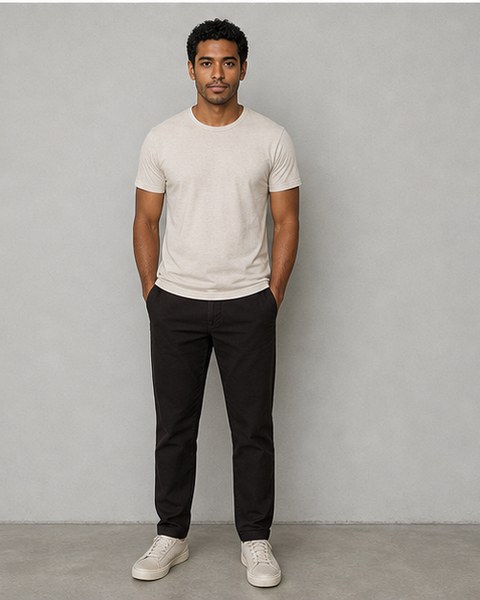
Step 4: make the rest of the profile add information
A complete profile is not six versions of the same face. Build four to six useful roles, subject to the current requirement shown by the app:
| Role | Question it answers | Failure to remove |
|---|---|---|
| Clear portrait | Who is this? | Hidden face, old appearance or another plausible subject |
| Full appearance | What do they look like beyond a close crop? | A second tight selfie pretending to add variety |
| Ordinary context | What might a normal day feel like? | A generic staged scene you cannot explain |
| Real activity | What do they actually do? | Standing beside equipment or a setting unrelated to your life |
| Social or warm detail | What specific connection or story is here? | A confusing group or a borrowed pet presented as yours |
| Different occasion | Does the profile show range? | The same pose, clothes and expression in another background |
Use the remove-one test: hide one photo and name the useful fact that disappeared. If nothing disappeared, the image is filler. The free private photo audit turns the same checks into a repair order without uploading a face.
Step 5: give a match something specific to respond to
A profile can be visually clear and still feel difficult to enter. Replace a generic claim such as “I love travel, food and music” with one recent, answerable detail: the dish you are learning, the walk you repeat, the match you are attending or the place you would take a visitor. Bumble's current prompt guidance recommends authentic, varied and positive answers that show personality. Hinge says prompt answers that reveal something about the person tend to receive more engagement from like-minded daters.
Pair the detail with a photo only when they tell the same truth. A “my happy place” prompt beside a location you have never visited weakens the profile instead of creating a conversation route.

Do not buy visibility before the profile passes
Hinge says Boosts increase exposure for a fixed period, and Bumble says Spotlight pushes a profile to more people. Those products change who may see the profile; they do not certify that the opener, set or prompts are strong. Check eligibility, pool and presentation first. Otherwise you pay to distribute an unresolved profile.
A paid boost also cannot function as a clean scientific test. Timing, location, the active pool and app distribution can all change at once. Treat any result as an observation from that session, not proof of a universal formula.
Do not reset an account because a competitor calls it “profile decay”
Several current commercial guides describe quiet accounts as shadowbanned, suppressed or decayed and recommend activity patterns or resets. The official sources reviewed do not give a public test that lets a reader diagnose those states from match count alone. Bumble specifically warns that repeatedly deleting and recreating profiles can hurt a person's chances.
If the app displays a warning, removes content, hides the profile or loses normal functions, use its official troubleshooting and support flow. If the app functions normally, repair the observable inputs before considering destructive account changes.
Use a seven-day controlled repair, not daily panic edits
- Record the baseline. Save screenshots of the current lineup, prompts and relevant preferences. Record the city and date; do not invent impression data.
- Fix eligibility immediately. Resolve any pause, hidden-profile, removed-content or completion notice.
- Make one profile repair. Replace the clearest fatal failure: usually the opener, an identity inconsistency or missing full-body context.
- Leave unrelated variables alone. Do not simultaneously reset the account, buy a boost, change every preference and replace every prompt.
- Review after a full week. Record what happened, but do not call one person's short observation proof of causation.
The seven-day window is a practical comparison period, not a platform rule or ranking promise. Its value is disciplined observation: you can see what you changed instead of reacting to every quiet evening.
AI photos must pass the same truth test
An AI-made portrait is not a cure when it changes identity, age, body, hair or life context. Remove any result that would surprise someone meeting you. Do not use a generated yacht, borrowed dog, false workplace or unfamiliar landmark as evidence of a life you do not live. There is no verified universal ratio of AI to camera photos that creates matches.
Use generation only to create a current, recognisable option for a missing visual role. Keep real photographs for people, pets, teams and events that should not be invented. Read the AI dating-photo authenticity guide before publishing.
Know when to pause instead of optimising harder
Pew's 2022 US survey found that men who had recently used online dating were more likely than women to say they felt insecure about receiving too few messages. That does not describe every man or explain any account, but it shows that the feeling is not unusual. A match count is platform feedback, not a measurement of personal worth.
If checking the app is becoming compulsive, angry or demoralising, take a defined break. Bumble provides Snooze, Hinge provides Pause and Tinder lets members turn Discovery off. These modes hide the profile from new discovery while preserving different parts of the account; read the current in-app explanation before using one. A break is a valid outcome, not a failed optimisation.
The final publish checklist
- No pause, snooze, hidden-profile, removed-content or completion warning remains.
- Age, distance and dealbreakers reflect real preferences rather than accidental restrictions.
- The opener is a current, clear solo photograph at phone-card size.
- The full set adds distinct, truthful information instead of duplicate portraits.
- At least one prompt or photo creates a specific, honest conversation route.
- No person, pet, place, activity or body detail is falsely implied.
- Only one major variable will change in the next comparison period.
Sources and method
- Hinge: Why Aren't I Getting Any Matches?, updated 27 July 2026 and checked 4 September 2026.
- Tinder: Discovery Settings, updated 9 December 2024 and checked 4 September 2026.
- Tinder: My profile is hidden, updated 6 June 2024 and checked 4 September 2026.
- Hinge: What happens when content is removed?, updated 17 February 2026 and checked 4 September 2026.
- Hinge: Pausing, updated 23 December 2025 and checked 4 September 2026.
- Bumble: Standing out on Bumble, updated 6 November 2025 and checked 4 September 2026.
- Bumble: Adding profile prompts, updated 29 July 2026 and checked 4 September 2026.
- Bumble: Taking a break from online dating, updated 1 September 2026 and checked 4 September 2026.
- Bumble: Using Incognito Mode, updated 12 March 2026 and checked 4 September 2026.
- Pew Research Center: experiences of US online daters, survey of 6,034 US adults conducted in July 2022; checked 4 September 2026.
The four-branch diagnosis, seven-day repair and publish checklist are Matchframe editorial tools built from current official app controls and guidance. They have not been validated as predictions of likes, matches, conversations, dates or relationships. Competitor pages were reviewed for search intent and workflow coverage, but their algorithm, shadowban and outcome claims were not accepted without primary evidence. See the editorial method.
Frequently asked questions
Why am I getting no matches on dating apps?
No matches can reflect a hidden or paused profile, a narrow available pool, weak profile response, incomplete content or a technical issue. Match count alone cannot distinguish those causes.
How do I know if my dating profile is visible?
Check the app for Pause, Snooze, Discovery, hidden-profile, removed-content and completion notices. A quiet match count by itself does not prove whether the profile is being shown.
Am I shadowbanned if I get zero matches?
Zero matches alone is not enough evidence to diagnose a shadowban. Use official support when the app displays a warning, hides the profile, removes content or loses normal features.
Which dating-profile photo should I replace first?
Replace an old, unclear, distant, heavily filtered or group opener with a current solo photo where the face and eyes remain easy to identify at phone-card size.
Should I delete and recreate my dating profile?
Do not reset an account only because results are quiet. Fix observable eligibility, setting and profile problems first; Bumble explicitly warns against repeatedly deleting and recreating profiles.
Should I pay for a Boost when I have no matches?
A Boost or Spotlight may increase exposure, but it does not repair a weak or incomplete profile. Check eligibility, pool, photos and prompts before paying for more visibility.
How long should I test a profile change?
A seven-day comparison is a practical editorial window, not an app rule. Change one major variable, record the baseline and avoid treating a short personal result as proof of causation.
Will better dating photos guarantee matches?
No. Better photos can make recognition and profile context clearer, but location, preferences, fit, timing and app distribution also affect outcomes.
Can AI photos fix a no-match profile?
Only if they remain current, recognisable and truthful while filling a real visual role. AI photos cannot fix hidden discovery, narrow filters, weak prompts or a poor local fit.
Is taking a break from dating apps okay?
Yes. Bumble Snooze, Hinge Pause and Tinder Discovery controls can hide a profile from new discovery. A break is sensible when app use becomes compulsive or demoralising.
Your camera roll may be the bottleneck
Matchframe builds a varied dating-photo set from the current photos you already have; you choose which results to post.
Open MatchframeAlso worth reading
- Dating app photo ideas for men
One strong set, ordered for Tinder, Hinge and Bumble - Are AI dating photos catfishing?
The recognition test and current Tinder, Hinge and Bumble guidance - AI dating photos vs a photographer in India
Cost, effort, realism and when each choice is better - AI dating photo apps in India: what they cost in rupees
Prices compared, plus the forex fees nobody lists