Expression guide
Should men smile in dating-profile photos?
Yes, usually. A man should normally include at least one natural smile in his dating profile and test it for the first photo. Also shoot a relaxed neutral expression under the same light, distance and crop, then keep the familiar frame that looks comfortable rather than forced.
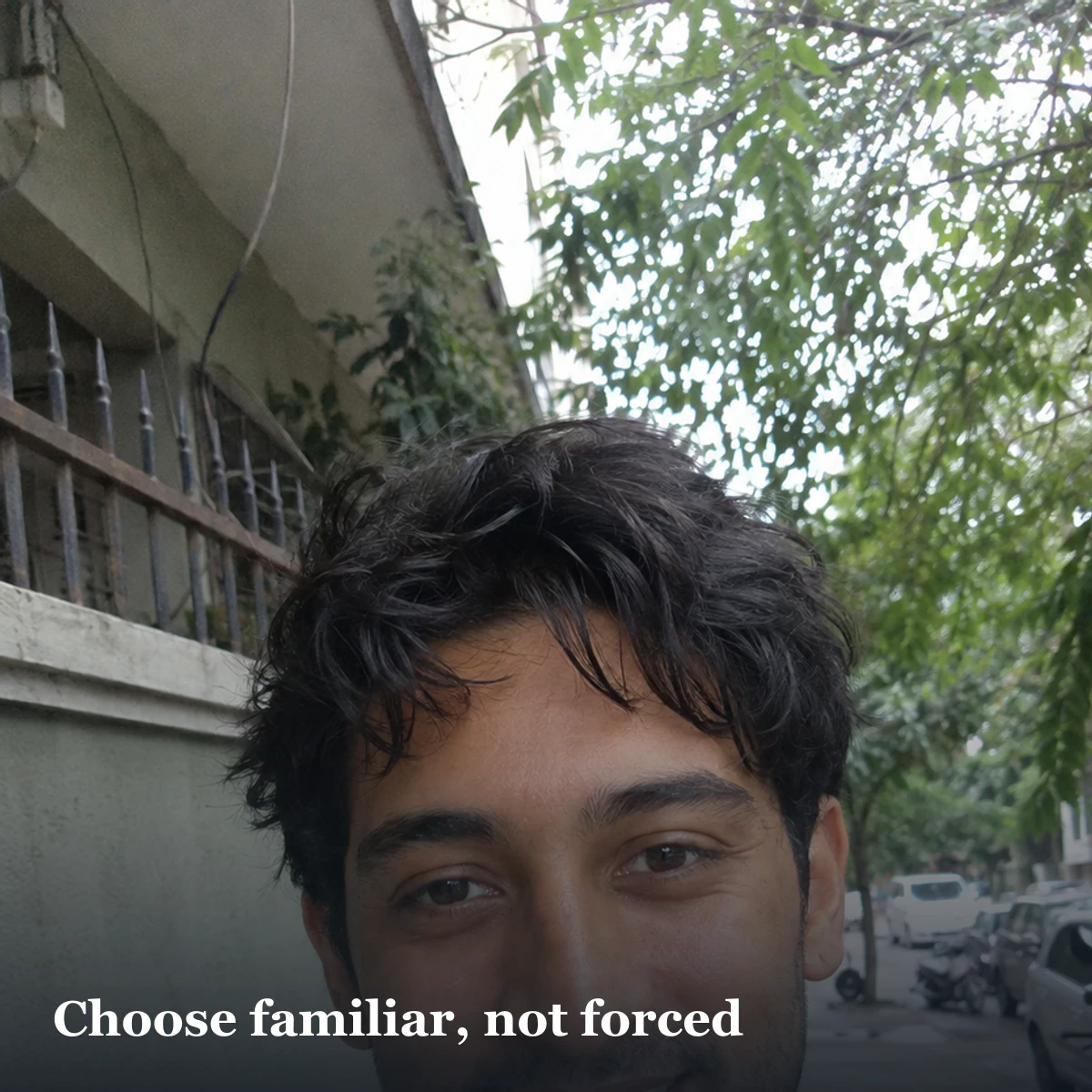
Change the expression, not the whole photograph
- Relaxed neutralExhale; keep the jaw loose and eyes present.
- Conversational smileAnswer a real question while the camera keeps shooting.
- Natural full smileUse a real reaction, then check sharpness and familiarity.
Decision rule: keep camera, light, distance, clothing and crop steady. Choose the version that remains recognisable and relaxed at phone-card size. This is an editorial selection method, not a match-rate formula.
What the evidence actually says
| Evidence | What it found | What it did not test |
|---|---|---|
| Okubo et al., laboratory face ratings | A smiling advantage appeared for long-term-partner ratings, but not short-term-partner ratings, in the reported experiment | Dating profiles, swipes, Indian users or current apps |
| Carrito et al., manipulated face experiments | Expression changed how participants perceived masculinity and attractiveness preferences | Natural profile lineups or match outcomes |
| Photofeeler 2026 commercial rating analysis | Reports higher male dating-photo ratings for both open- and closed-mouth smiles; its largest reported change was trustworthiness | Dating-app swipes, causation, Indian users or public raw-data verification |
| SwipeScore commercial swipe report | Reports smiling first photos below non-smiling first photos in its own US sample | An independently auditable dataset, India, other apps, conversations or dates |
The results conflict because the sources measure different things. A photo-rating panel can judge attractiveness or trustworthiness while a dating app records a swipe on the complete profile. The academic experiments isolate faces but do not reproduce a live profile. The commercial reports use broader behaviour but do not expose enough data for independent reproduction. The best current default is therefore to shoot a natural smile and a matched neutral frame, not to turn either expression into a permanent rule.
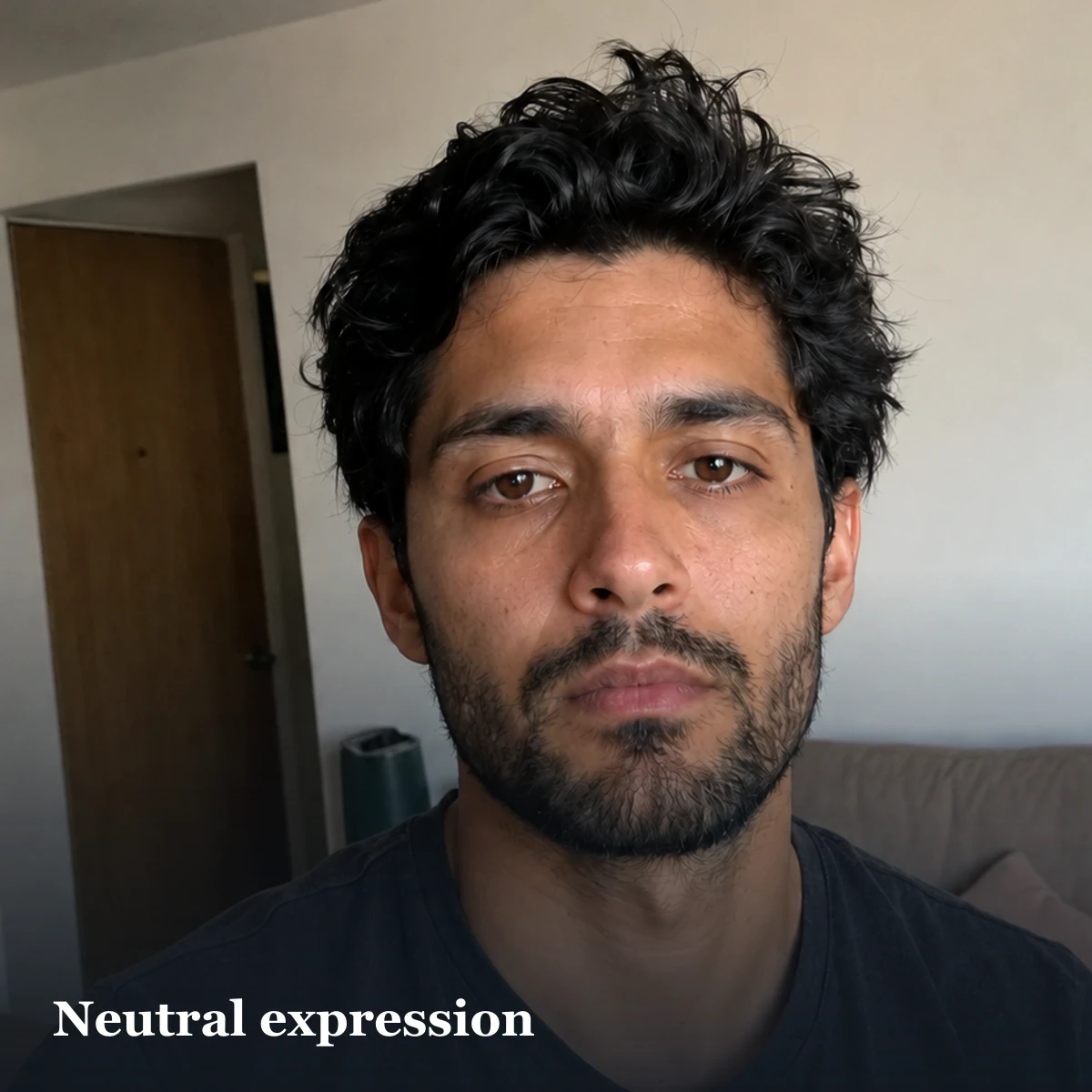
Choose expression by photo role
| Photo role | Expression to test | Keep it when | Reject it when |
|---|---|---|---|
| First portrait | Relaxed neutral, slight smile and natural full smile | Identity and eyes stay clear at card size | The face reads tense, angry or unfamiliar |
| Activity | Expression created by the real action | The moment explains the face naturally | You pause the activity only to manufacture a grin |
| Dressed occasion | Calm or warm composed variation | It adds range after identity is established | The expression repeats the opener exactly |
| Social or candid frame | Real reaction or laugh | Your face remains readable and everyone consented | Motion blur, closed eyes or other people hide identity |
This is a Matchframe selection method, not a Tinder, Hinge or Bumble ranking formula. Expression is only one variable beside gaze, crop, light, recency, setting and the rest of the profile.
Run a matched three-minute expression test
- Keep the camera, distance, crop, light and clothing unchanged.
- Look away, exhale, then return your eyes to the lens for a relaxed neutral burst.
- Answer an ordinary question while the photographer captures a small conversational smile.
- Use a real memory or joke for a full smile or laugh rather than holding the mouth in position.
- Compare equal-size frames for recognition, relaxed eyes, jaw tension, sharpness and crop safety.
Changing only the expression makes the comparison more useful. If the smiling version also has better light, a closer crop and a different camera angle, you do not know which difference changed the impression. Do not call a few days of app activity proof that the expression caused the result; visibility and audience mix can change at the same time.
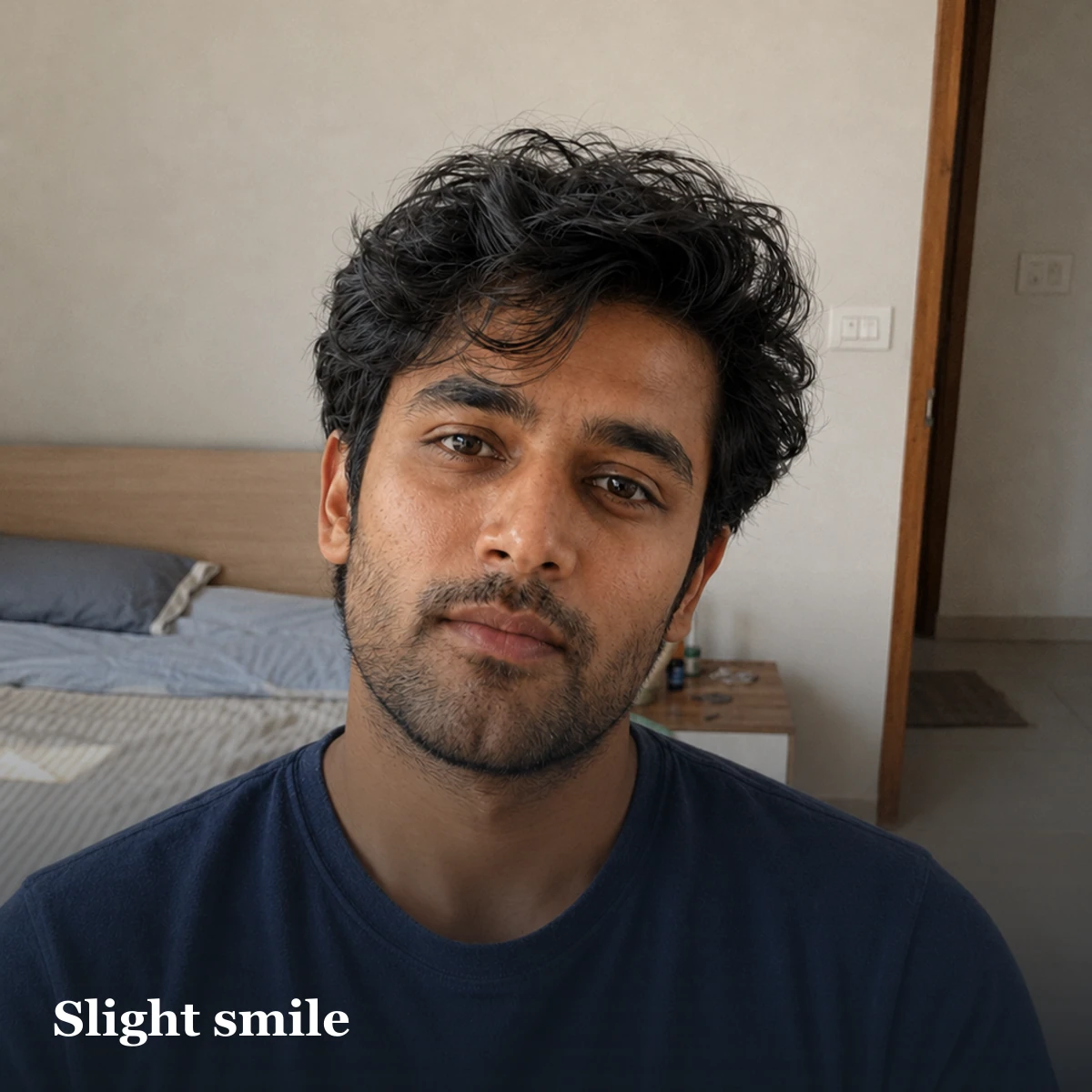
Score familiarity before attractiveness
| Check | Pass | Replace or reshoot |
|---|---|---|
| Recognition | Someone who knows you identifies you immediately | Smile, teeth, cheeks or eye shape look unfamiliar |
| Ease | Eyes, mouth, jaw and shoulders belong to one expression | Jaw clenches, shoulders lift or eyes look disconnected |
| Clarity | Eyes and face remain sharp at phone-card size | Laugh motion or a tight crop hides important features |
| Role | The expression fits what is happening in the photograph | A posed grin interrupts the activity or occasion |
| Difference | The frame adds warmth or range missing elsewhere | It repeats another close-up with the same expression |
Choose the most familiar passing frame, not the photograph with the largest smile. Attractiveness is subjective; identity drift and visible tension are actionable failures.
Inspect AI-generated smiles at full size
Generated smiles can create extra or merged teeth, broken lip edges, inconsistent dimples, changed cheek volume or an eye shape that no longer resembles the person. Inspect the full-resolution image and compare it with a current source photograph. Reject the result when the face becomes unfamiliar, even if the expression appears polished.
Tinder's current Photo Enhance guidance describes technical improvements such as clarity, blur, brightness and exposure, and says the feature is not designed for cosmetic effects or facial-feature changes. Treat a newly generated smile as an identity edit that needs a stricter check, not as ordinary exposure correction.
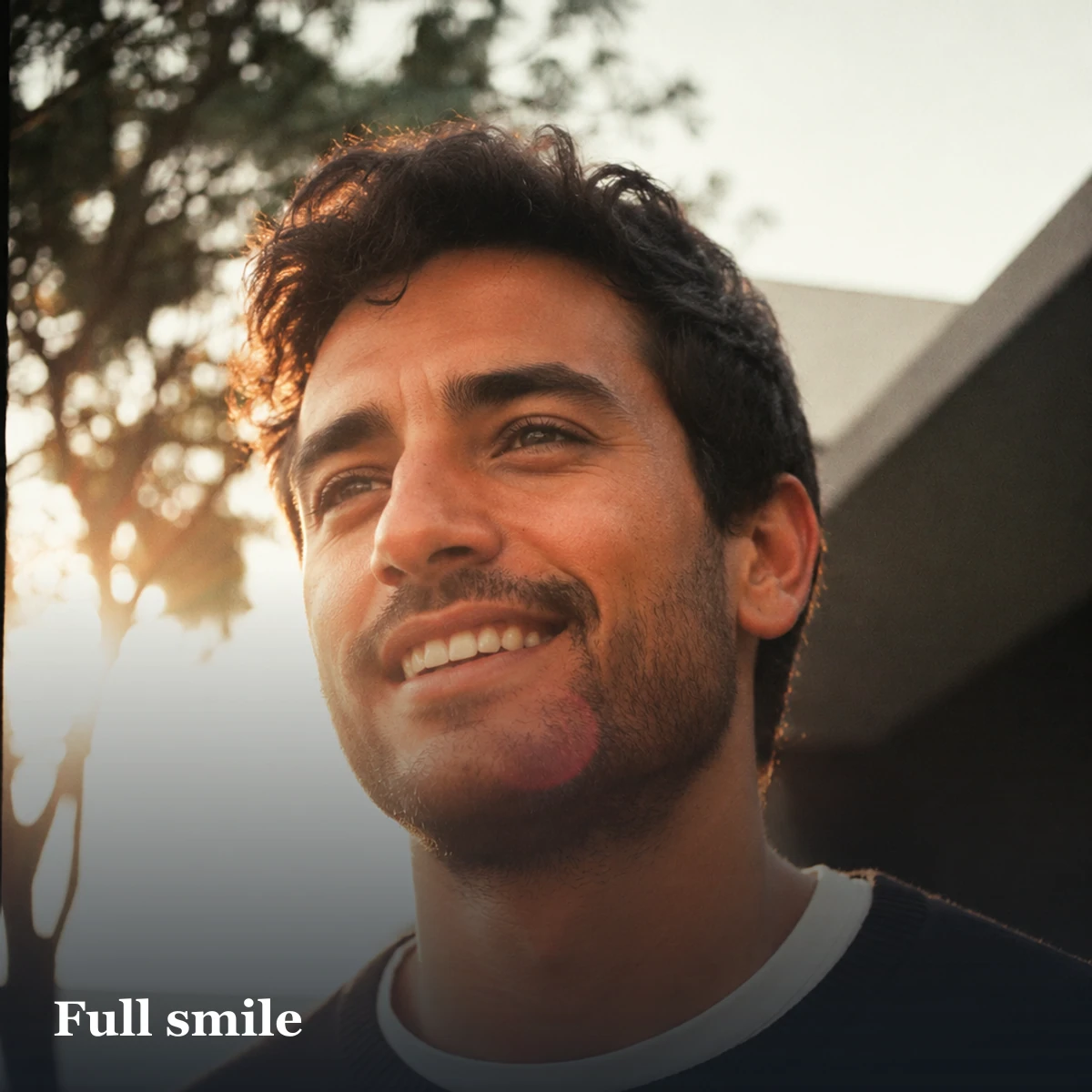
How much expression variety is enough?
There is no evidence-backed universal count. A practical set might contain one clear warm portrait, one real laugh or conversational moment and one calmer composed frame, with the remaining photos chosen for body context, activity and setting. Expression should support those roles instead of becoming the only difference between several close-ups.
Use another person for the final choice
The open-access “Choosing face” study found a cost to selecting one's own profile images compared with choices made for unfamiliar people. It did not prove that smiling causes more dating matches. Its useful practical lesson is narrower: ask someone else which frame looks most like the comfortable version of you they know. Then apply the first-photo chooser at small display size. This second opinion can happen later; it is not required to run the matched test or improve the current set today.
A smile is not a dental requirement
A relaxed closed-mouth smile can be completely natural. Visible teeth are not a universal quality signal, and discomfort is visible when a photographer demands them. The stronger question is whether the eyes, jaw and posture belong to the same expression. A wide smile with tense shoulders often reads as more staged than a smaller expression held during conversation.
Cultural habits, facial difference, dental conditions and neurodivergence can all affect how someone expresses warmth. The goal is not to standardise every face. It is to avoid a complete set of defensive or identical expressions when that does not represent the person.
Direct the moment instead of the mouth
Ask the subject to greet a friend arriving, explain a favourite place or react to a real memory. Shoot before, during and just after the answer. The transitions usually create more believable options than holding “smile” for ten seconds. Keep the clearest identity frame first; place the broadest laugh later when motion blur, closed eyes or crop do not reduce clarity.
Sources and limitations
- Okubo et al.: smiling and male facial attractiveness, 2015 experiments across relationship contexts; not a dating-profile or app-outcome study.
- Carrito et al.: When he smiles, 2023 face-expression experiments; not a test of profile lineups, swipes or matches.
- Photofeeler: The Science of Smiling in Photos, commercial platform analysis checked 5 September 2026. The page labels its result correlational and does not publish raw swipe data.
- SwipeScore: The Swipe Report, commercial report checked 10 September 2026. Its reported dataset is not public, its US platform is unnamed and its outcome ends at the swipe.
- Tinder's current Photo Enhance guidance, reviewed 4 September 2026; the help page says it was updated 15 June 2026.
- White, Sutherland and Burton: Choosing face, open-access profile-image selection study; it does not report Matchframe outcomes.
- Matchframe editorial method: no invented match-rate or algorithm claims.
Frequently asked questions
Should men smile in their first dating photo?
Usually, yes: start by testing a natural smile for the first photo. Also capture a matched relaxed-neutral frame and keep the familiar, comfortable image rather than forcing the biggest smile.
Is a serious dating-profile photo bad?
No. One calm composed frame can add range later, but an entire set of identical serious expressions can feel closed or repetitive.
Do I need to show my teeth in a dating photo?
No. A relaxed closed-mouth smile can be completely natural. Check whether the eyes, jaw and posture look comfortable rather than treating visible teeth as a requirement.
How do I stop my smile looking forced?
Use movement or conversation, shoot short bursts, and compare relaxed eyes, jaw and shoulders rather than choosing the biggest smile.
Can AI fix my smile for a dating photo?
Generated smile changes can alter teeth, lips, cheeks and eye shape. Reject any result that looks unfamiliar; a polished expression is not worth identity drift.
How many smiling dating-profile photos should I use?
There is no universal evidence-backed number. Use enough expression range to show warmth and composure without filling the profile with repeated close-ups.
Build expression range without repeating portraits
Generate varied scenes from one current identity and keep only expressions that still feel familiar.
Open MatchframeAlso worth reading
- Group photos on dating apps
Consent, placement and privacy rules - Should men use shirtless dating-app photos?
A policy, privacy, context and intention test - Should you use a dog photo on a dating profile?
A truth, welfare, identity and privacy decision - How to crop dating-profile photos
A safe-area method without fragile pixel claims