Context guide
Should men use shirtless photos on dating apps?
Usually, skip it. Keep one only when a real activity explains the clothing, the image is comfortably inside the current app's content rules, your face remains recognisable, it adds a distinct role later in the lineup and the complete profile communicates what you intend.
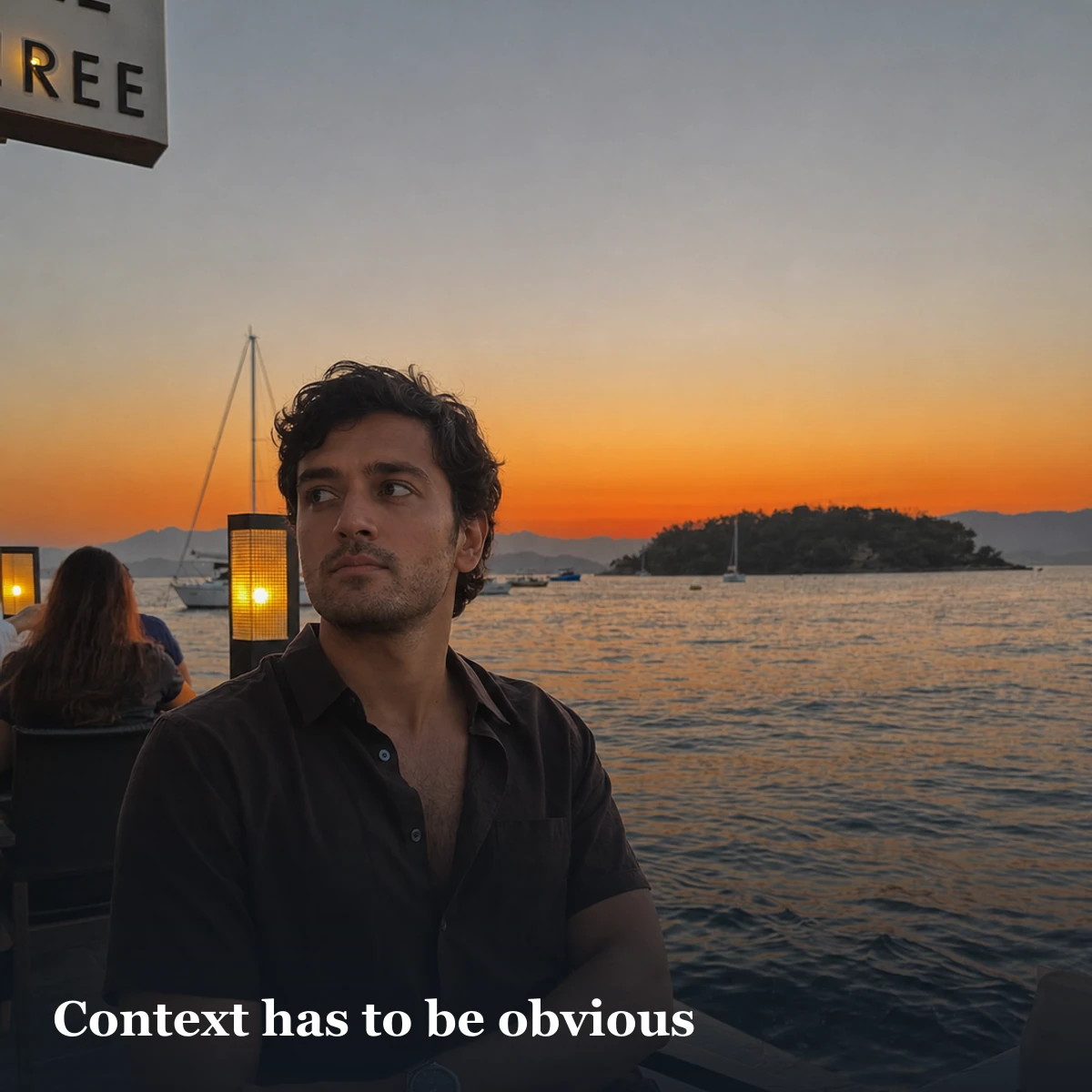
A body-context photo passes only when every answer is yes
Decision rule: one no means replace it with a fitted-clothing activity or current full-body frame. Passing this editorial gate does not guarantee app approval or more matches.
Start with three different questions
| Question | What answers it | What it cannot answer |
|---|---|---|
| Is it allowed? | The current app's public rules and the specific frame | Whether moderation will approve every borderline case |
| What does it communicate? | The setting, pose, crop, expression and complete profile | How every individual viewer will interpret it |
| Is it useful? | Whether it adds a true role missing from the lineup | A guaranteed change in ranking, matches, conversations or dates |
Do not collapse these into one answer. A photograph can remain inside a written policy and still be unclear or repetitive. A photograph can look attractive to one person and still be unsuitable as the opener. An app accepting the upload is not an endorsement, and a single change in match count is not proof of causation.
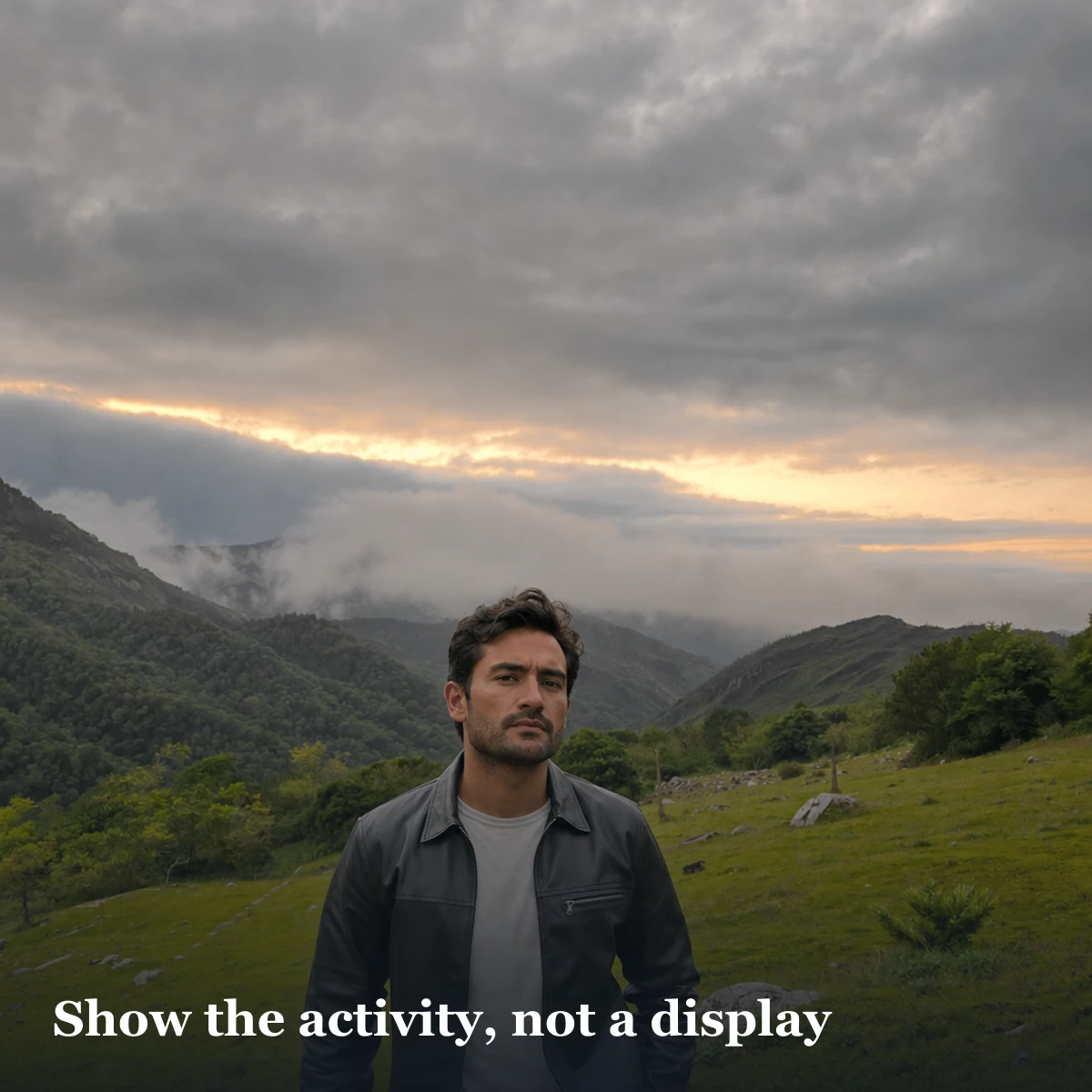
Choose one of four outcomes
| Outcome | Use it when | Next action |
|---|---|---|
| Keep | Truth, policy distance, identity, role and intended signal all pass | Use one later in the lineup and check the live crop |
| Move | The frame is truthful and useful but currently leads | Place a clear current face portrait before it |
| Recapture | The activity is real but crop, light, privacy or face visibility fails | Photograph the same real activity more clearly |
| Replace | The event is invented, the frame is near a policy boundary, or the signal is unwanted | Use a clothed activity or honest full-body alternative |
Use the five-part keep-or-replace gate
| Check | Pass | Fail |
|---|---|---|
| Event truth | The swim, beach day or sport actually happened | The scene exists only to justify a body display |
| Policy distance | Ordinary activity context, clearly away from nudity or sexual content | The decision depends on a moderator accepting a borderline interpretation |
| Identity clarity | Face, eyes and activity remain readable at phone-card size | Phone, crop, pose or shadow makes the body the only clear subject |
| Profile role | One later frame adds new activity or place information | It leads or repeats another body-focused, beach or gym image |
| Intended signal | The complete profile supports the interpretation you are comfortable sending | You need the bio to correct what the photographs imply |
Truth and policy distance are stop gates. If either fails, do not try to rescue the image with a better crop. Identity, role and signal can sometimes be repaired by moving or recapturing the real moment.
Common shirtless-photo situations
| Situation | Likely decision | Reason |
|---|---|---|
| Swimming, surfing or water sport | Keep or recapture | The activity can explain the clothing when the event is real and recognisable |
| Ordinary beach or pool day | Keep only after the opener | Use a wider context frame; do not turn the crop into a torso study |
| Bathroom or bedroom mirror | Replace | Private interior, phone obstruction and body display usually outweigh useful context |
| Gym-floor mirror | Usually replace | Other members, mirrors, equipment labels and one-note presentation create avoidable risk |
| Locker room or changing area | Replace | Do not photograph or publish people in a place where privacy is expected |
| Finish-line or sport event | Recapture or use a clothed frame | The achievement should remain clearer than the amount of skin |
| Group beach photograph | Ask, crop or replace | Everyone identifiable needs permission for dating-profile use |
| A minor is visible | Replace | Use a different frame rather than treating a crop as the only safeguard |
What Tinder, Hinge and Bumble currently publish
| App | Relevant current public rule | Bounded conclusion |
|---|---|---|
| Tinder | No nudity, sexual content, sexual desires or looking for sex on a public profile | The rule does not promise approval or performance for every contextual shirtless frame |
| Hinge | No nudity or sexually explicit imagery; no misleading AI content or material used without permission | Use a real, current and owned image well away from the boundary |
| Bumble | No nude, sexually explicit or sexually vulgar profile content; at least one solo full-face photo is required | Establish identity separately and treat body context as optional |
These are content boundaries, not photo-order or ranking instructions. None of the reviewed policy pages says that a shirtless photo earns or loses distribution. Wording and enforcement can change, so use the live policy rather than a copied social post when a frame is close to the line.
Allowed does not mean safe, useful or effective
Upload success proves only that the file passed at that moment. It does not prove that every later report, human review, crop or policy version will produce the same result. It also says nothing about whether the photograph helps a stranger recognise you or understand your life.
Stay away from edge cases instead of reverse-engineering how much nudity a system might tolerate. If the frame works only because you can argue that it is “technically not explicit,” it is a poor candidate for a public dating profile.
What the research can and cannot tell you
A 2022 experiment by Daniels, Jerald and Dieker showed 567 US college students a mock Tinder profile of one young White man. It compared a sexualised and a non-sexualised presentation. The manipulation included more than one cue: a self-description about casual sex and a muscular, shirtless appearance. Participants rated competence, social appeal, physical attractiveness and likelihood of risky sexual behaviour.
The study supports a narrow conclusion: sexualised self-presentation can change how viewers interpret a profile. It did not isolate every natural beach photograph, test current Indian app users, or measure real swipes, matches, conversations, dates or relationships. The authors also report that the underlying data cannot be shared with interested researchers because aggregated sharing was not included in the participant consent process.
A separate 2025 study classified 1,000 Tinder profile pictures from Barcelona into nine recurring presentation patterns. Nudity or semi-nudity formed one cluster. That describes body exposure as a recognisable presentation strategy; it does not show that the strategy causes better or worse outcomes.
Do shirtless photos get more matches?
There is no verified universal answer. Current competitor pages repeat percentages, timers and match multipliers without publishing a transferable experiment that tests one contextual shirtless image against the same complete profile. Matchframe does not turn those marketing numbers into advice.
If you test the photo on your own profile, change only that material variable and record the date, app, lineup and observation window. Treat the result as a personal signal, not a rule for other men. Changes in location, season, activity, app product design and who was active can all affect the count.
Match the image to your intent without stereotyping viewers
A body-focused image can make physical presentation more prominent. That does not prove that every viewer will read it as casual, vain, confident, athletic or sexual. Do not claim to know what “women want” or what “serious daters” always reject. Look at the complete profile and ask whether the photographs and written intent support one another without a correction.
If you want to communicate swimming, show swimming. If you want to communicate training, show the real sport or event. If the only intended message is physique, decide whether you are comfortable making that one of the limited facts in the profile. The honest answer can be yes; it still does not make the result predictable.
Where should the photo appear?
Lead with a current solo face. A clear opener performs the basic identity job without asking a stranger to interpret clothing or context. If the shirtless frame passes, use it later as one part of a varied set after ordinary appearance and at least one real-life role are already clear.
This is conservative editorial guidance, not a disclosed Tinder, Hinge or Bumble ranking rule. Use the first-photo chooser for the opener and the role coverage test to remove repetition.
Run the explanation-free interpretation test
- View the candidate at the app's normal small card size, without opening it.
- Write the first three neutral facts visible in the image.
- Then view the complete profile in order and write what it appears to prioritise.
- Do not use the bio, a caption or your memory to explain why the shirt is off.
- Move, recapture or replace the frame if the intended activity is not visible.
You can run this yourself now. A friend can provide a useful second reading later, but their opinion is not a scientific result. Record the words they use rather than asking whether they simply “like” the photograph.
How to recapture truthful body context
- Photograph a real swim, surf, run or sport rather than staging a lifestyle.
- Use a wider frame so water, equipment, course or activity explains the clothing.
- Keep the face large enough to recognise at phone-card size.
- Use even light and normal posture; do not hide identity behind a phone or heavy shadow.
- Capture a clothed version during the same session so the lineup has a lower-risk alternative.
- Review the background and every other person before saving a public candidate.
Keep the original file and test the live crop. If the app removes the board, pool, finish line or other fact that explains the frame, use the non-destructive crop workflow or choose the clothed version.
Gym and changing-room privacy is a stop gate
Mirrors can expose people outside the intended frame, including through distant reflections. Screens, membership cards, locker numbers, class timetables and routine locations can reveal more than expected. A person's face is not the only identifying detail.
Do not take or publish a dating-profile photograph in a locker room, changing area or another place where people reasonably expect privacy. On an ordinary gym floor, ask permission from anyone identifiable and follow the venue's photography rules. When in doubt, recapture outside or use a solo activity photograph.
Other people, ownership and minors
Ask every identifiable adult specifically about dating-profile use. Permission to take a beach photograph or post it in a private group does not automatically cover a public dating audience. If a photographer took the image, permission from the people shown does not by itself settle copyright or licensing.
If a minor appears, replace the frame. Tinder and Bumble publish specific limits around images of children, while Hinge's current prohibited-content page says minors must not be included in photos. This article is not legal advice; it uses the safer editorial choice because the child adds no necessary dating-profile role.
Do not manufacture the context with AI
A generated beach, pool, surf or gym scene can imply an activity that never happened. That is different from correcting exposure or making a non-destructive crop. Reject any output that changes physique, tattoos, scars, proportions, people, equipment, place or the event itself.
Hinge's current guidance explicitly prohibits AI-generated content used to mislead others. Truthful representation is the safer standard on every app. Read the AI-photo authenticity guide before publishing a generated lifestyle scene.
Choose a lower-risk alternative by intended signal
| What you want to show | Alternative | Why it can work better |
|---|---|---|
| Fitness | Fitted sports clothing during a real activity | Movement and identity remain clearer than display |
| Build | Current full-body photograph in ordinary clothes | Shows appearance without needing a sexualised context |
| Achievement | Finish-line, team or event frame with permission | The event becomes the readable fact |
| Outdoor life | Hike, walk, paddle or beach frame with suitable clothing | The place and activity add a conversation route |
| Confidence | Clear posture, expression and eye contact in a normal portrait | Confidence does not require undress |
Final publish check
- The event and clothing are current and truthful.
- The frame is comfortably inside the live app policy, not merely arguable.
- A clear solo face already establishes identity before this image.
- The face and activity both survive the app's card crop.
- The photograph adds a role not covered elsewhere.
- The complete profile communicates an intention you accept.
- No person, reflection, minor, private interior or location detail creates avoidable exposure.
- You have permission and the right to publish the file.
- No AI edit invents the activity or changes the body.
If truth, policy, privacy or permission fails, replace the photograph. Passing this editorial check cannot guarantee moderation, distribution, matches, messages or dates.
Recheck after upload
Inspect the live card and expanded profile rather than assuming the saved file is what others see. An app crop can remove the activity and leave only the body. Replace or reposition the image if context, face visibility or privacy changes.
If the platform removes the image, do not repeatedly upload near-duplicates to probe moderation. Review the current policy, choose a clearly safer alternative and use the app's normal support or appeal route when appropriate.
What this guide cannot promise
The workflow reduces unsupported claims, unclear signals and avoidable policy or privacy risk. It cannot predict an individual viewer, reveal a private ranking system, guarantee moderation or isolate one image from every other change in a live dating market.
Separate body context from body display
A swimming, surfing or beach-volleyball photograph can document a real activity while also showing physique. A bathroom crop usually documents only the decision to display it. Neither is automatically good or bad, but they send different signals. Choose the one that matches the conversation and relationship intent you are comfortable defending.
Check the whole frame for other people, alcohol, private interiors, gym members and location details. A public-profile image can expose more than the subject expects. Current platform rules also matter; moderation can depend on context, sexualisation and the presence of minors, not merely the amount of skin.
Use a lower-risk substitute when context is weak
A fitted T-shirt during a genuine sport, a running-event frame or a well-composed full-body photograph can communicate health without the ambiguity of a mirror selfie. Do not fabricate a beach or gym scene with AI to make the clothing seem justified. If the original event did not happen, the context is false even when the body remains recognisable.
Sources and limitations
- Daniels, Jerald and Dieker: Putting a Sexy Self Forward on Tinder, 2022 experiment using one mock male profile and 567 US college students; not a live app-outcome study.
- García-Alamán, Blanco-Cuaresma and Montesano: Stereotypical love, 2025 analysis of 1,000 Barcelona Tinder profile pictures; descriptive rather than causal.
- Tinder Community Guidelines, checked 8 October 2026.
- Hinge: Prohibited Content and Behavior, updated 29 June 2026 and checked 8 October 2026.
- Bumble Community Guidelines, checked 8 October 2026.
- Matchframe editorial method: no invented match-rate, moderation or algorithm claims.
Frequently asked questions
Are shirtless photos allowed on Tinder?
Tinder prohibits nudity, sexual content, sexual desires and looking for sex on public profiles. It does not guarantee that every contextual shirtless photo will be accepted, so stay well away from the boundary and recheck the live policy.
Do shirtless dating photos get more matches?
No reviewed evidence proves a universal match increase. One experiment found that a combined sexualised mock profile changed viewer perceptions, but it did not measure live swipes, conversations or dates.
Should a shirtless photo be first?
No. Establish a clear current face first and use one genuine activity image later only when it adds new context.
Are shirtless photos allowed on Hinge and Bumble?
Both apps prohibit nudity and sexually explicit profile content. Their public rules do not promise acceptance or improved performance for contextual shirtless photos.
Are shirtless mirror selfies good for dating apps?
They usually make body display the only readable fact and can expose private interiors or other people. Replace them with a real activity or current full-body photograph.
Can I use a shirtless photo if I want a serious relationship?
A photograph does not determine relationship intent by itself. Check whether the complete profile supports the intention you state without needing the bio to correct a body-focused lineup.
How can I show fitness without a shirtless photo?
Use fitted sports clothing during a real activity, a finish-line photograph or a current full-body image with normal posture and clear identity.
Can I use an AI-generated beach or gym photo?
Do not use a generated setting to imply an activity that never happened, and reject changes to physique, tattoos, scars, proportions, people or place. Hinge explicitly prohibits misleading AI-generated content.
What is a better alternative to a bathroom selfie?
Use a wider real activity frame, a fitted sports outfit, a finish-line photograph or a well-composed current full-body photo that makes context clear.
Build an active profile without one-note repetition
Choose activity, portrait and everyday scenes from one current identity.
Open MatchframeAlso worth reading
- Should you use a dog photo on a dating profile?
A truth, welfare, identity and privacy decision - How to crop dating-profile photos
A safe-area method without fragile pixel claims - Natural dating-photo backgrounds in India
Local light, privacy and plausibility checks - Ask a friend to take dating-profile photos
A copyable request and twenty-minute shot plan