India scene guide
Best backgrounds for dating-profile photos in India
The best dating-photo background in India is a familiar place with usable light, safe details and a story you can explain honestly. Keep the first-photo background simple so your face is immediately clear. Use later photos to show a real cafe, activity, occasion or outdoor setting.
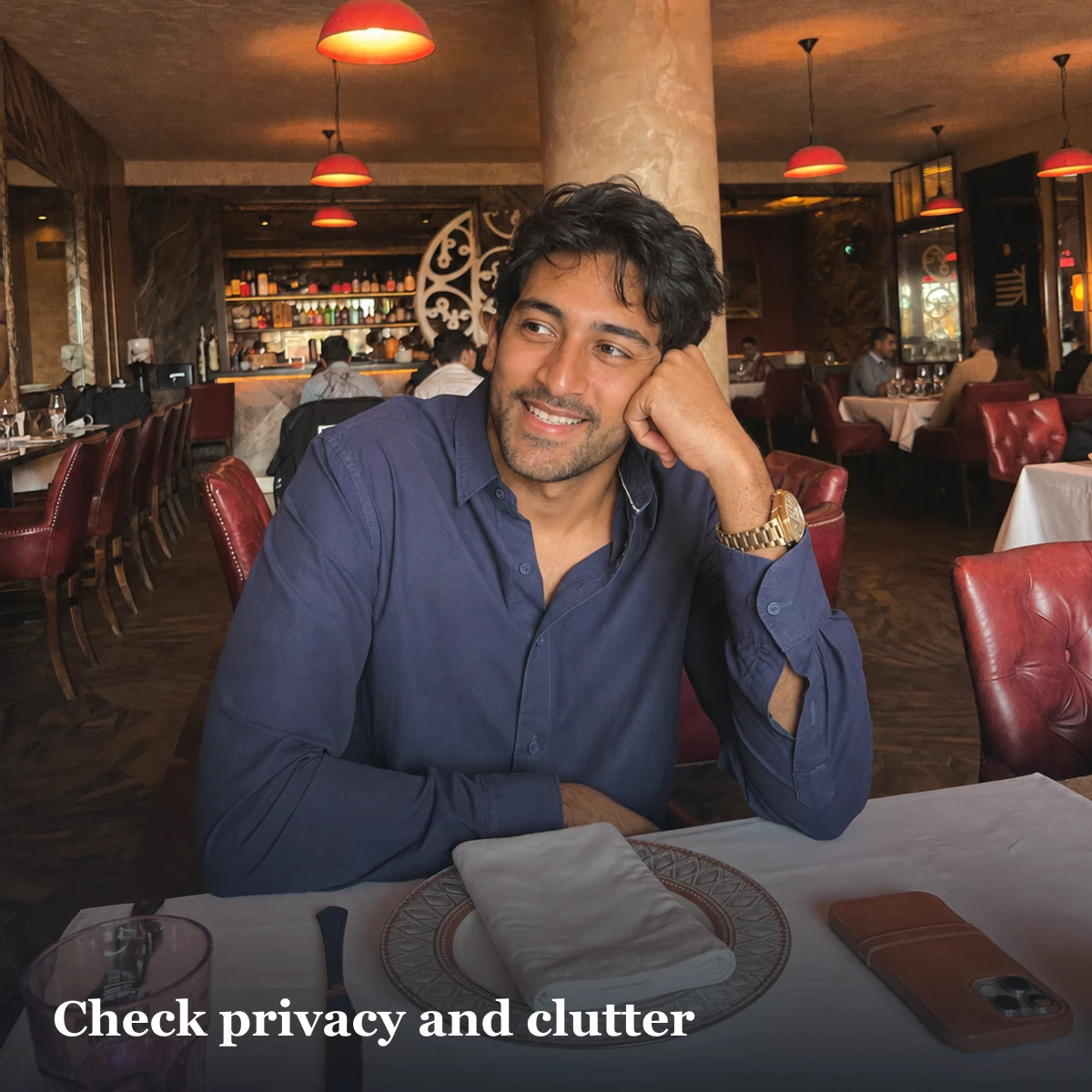
Light, truth, privacy and weather
Decision rule: if truth, privacy or weather fails, change the location. If only the crop fails, step back and make a wider original rather than repairing a screenshot later.
Choose the background by photo role
| Photo job | Useful background | Pass condition | Main risk |
|---|---|---|---|
| First photo | Open shade, uncluttered wall, quiet garden edge | Face stays obvious at card size | Crowds, signs and hard overhead light |
| Everyday life | Familiar cafe, bookshop area, terrace or walking route | You can name why you go there | Staged laptop props or visible private data |
| Activity | Real court, field, studio, trail or gym area | The action and equipment are genuinely yours | Borrowed gear or an activity you do not do |
| Dressed occasion | Actual wedding, festival, dinner or cultural event | The clothing and event are current and truthful | A crowded frame or false event context |
| Nature or city context | Park, waterfront, beach, market edge or streetscape | Place adds context while you remain readable | Backlight, tiny face or precise daily-route clues |
This table is a Matchframe shooting method, not a Tinder, Hinge or Bumble ranking formula. The aim is to give each photo a distinct, truthful job.
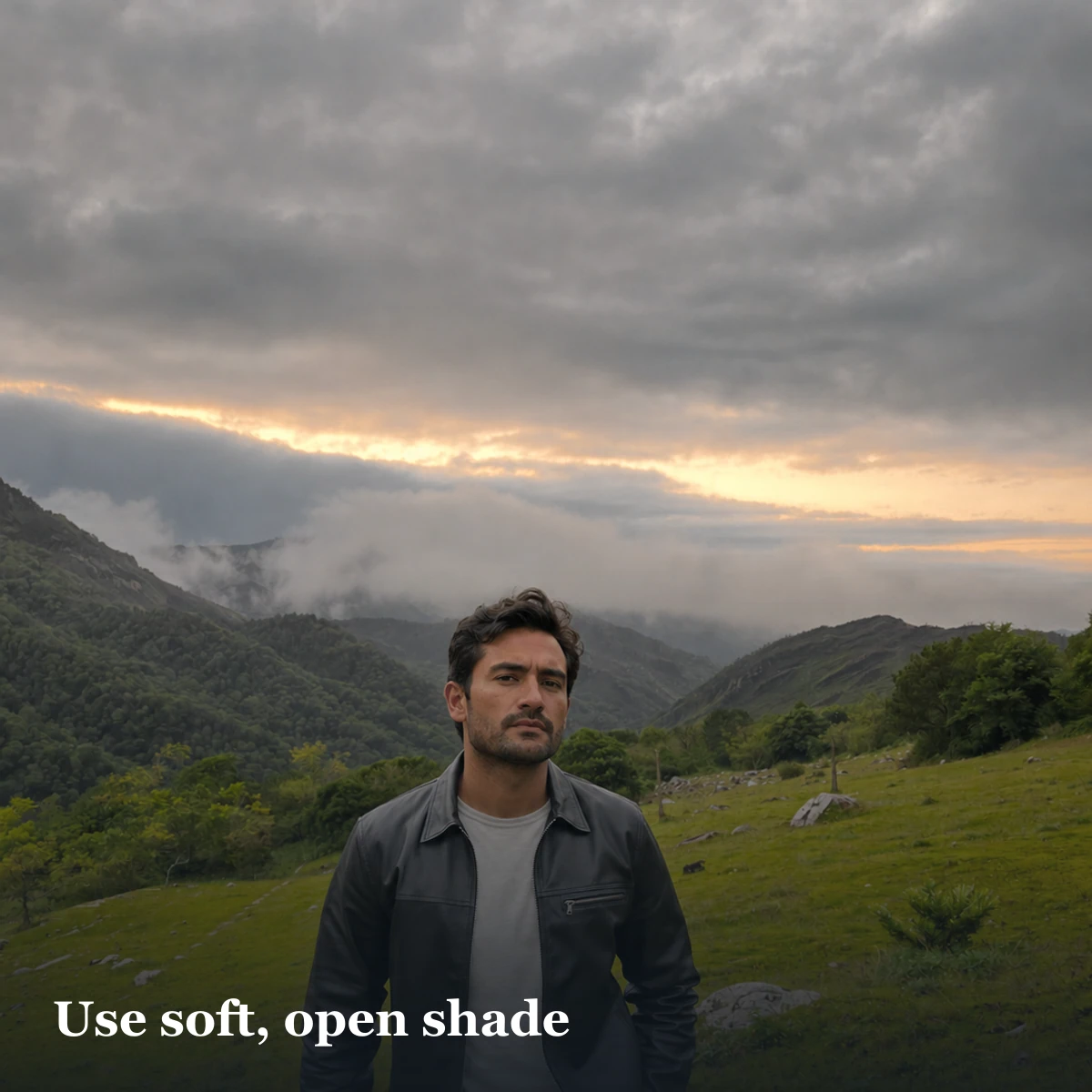
What current dating apps actually say
Bumble's current upload guidance asks for clear, high-quality, bright or well-lit photos with a clearly visible face. It suggests real hobbies, social moments, pets and travel as ways to add variety. Bumble's published platform data also recommends mixing indoor and outdoor settings. That guidance supports clarity and range; it does not prove that a cafe, beach or monument causes more matches.
Tinder's current Photo Enhance page draws another useful boundary. The feature can improve technical qualities such as clarity, lighting, blur and exposure, but it is not designed to add or remove people, objects or backgrounds. A completely new AI location is therefore a separate authenticity decision, not ordinary technical enhancement.
Keep the opener simple and let later photos add place
The first frame must establish identity before lifestyle. A quiet background, visible eyes and a safe crop matter more there than a famous location. Put broader place information later, after the viewer already knows who owns the profile.
A later photograph can show a weekend cafe, badminton court, beach walk or family occasion because the setting gives somebody an easy question. It still fails when the person is too small, the frame repeats another photo, or the location communicates a life the subject does not actually live. Use the first-photo chooser for the opener and the six-role planner for the complete set.
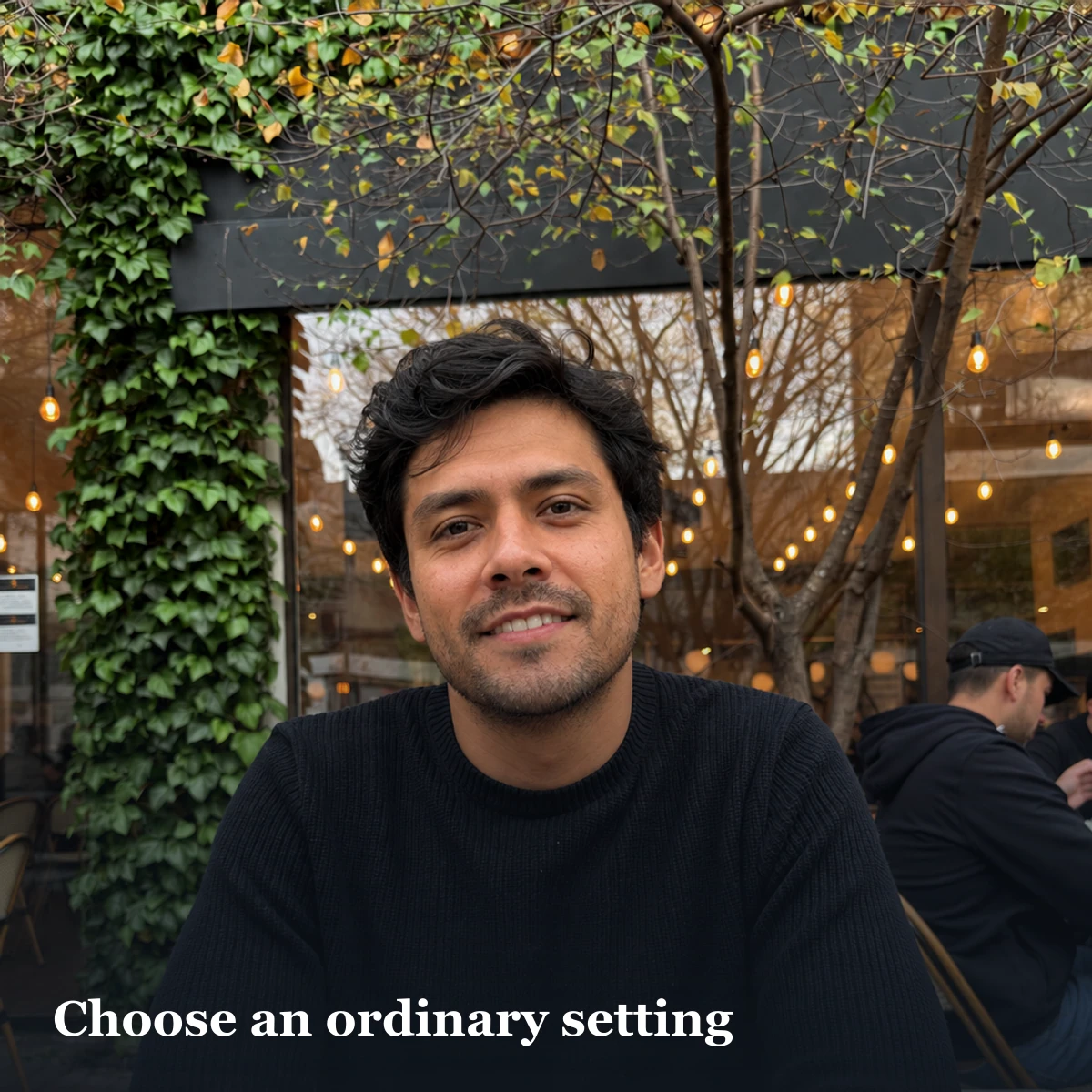
Plan around heat, rain and thunderstorms
Open shade beside a building, tree line or covered public walkway is a practical default because it reduces hard overhead shadows while leaving the face bright. This is an editorial lighting heuristic, not a promise of app performance. Clean the phone lens after humidity or rain and check one test frame before continuing.
Safety controls the schedule. India Meteorological Department guidance says to check the forecast before outdoor activity and move indoors when thunder is heard. Do not treat an awning, tree or open pavilion as lightning protection. IMD heat-wave guidance also recommends avoiding strenuous outdoor activity in direct sun during the hottest part of the day. On high-heat days, choose a cooler time, take breaks, use water and shade, or move the shoot indoors.
Keep identifying details out of the frame
Tinder's current Community Guidelines warn members against publicly displaying personal information. Before taking a photograph, turn around and scan the entire background for a home entrance, apartment name, office badge, school name, vehicle registration, QR code, boarding pass or private event sign. Do not publish the exact corner that reveals a daily commute or routine.
Move or reframe before shooting when possible. Heavy blur can attract attention to the hidden detail and may leave enough context for recognition. If another person is visible, get permission or choose a cleaner angle rather than assuming a distant face does not matter.
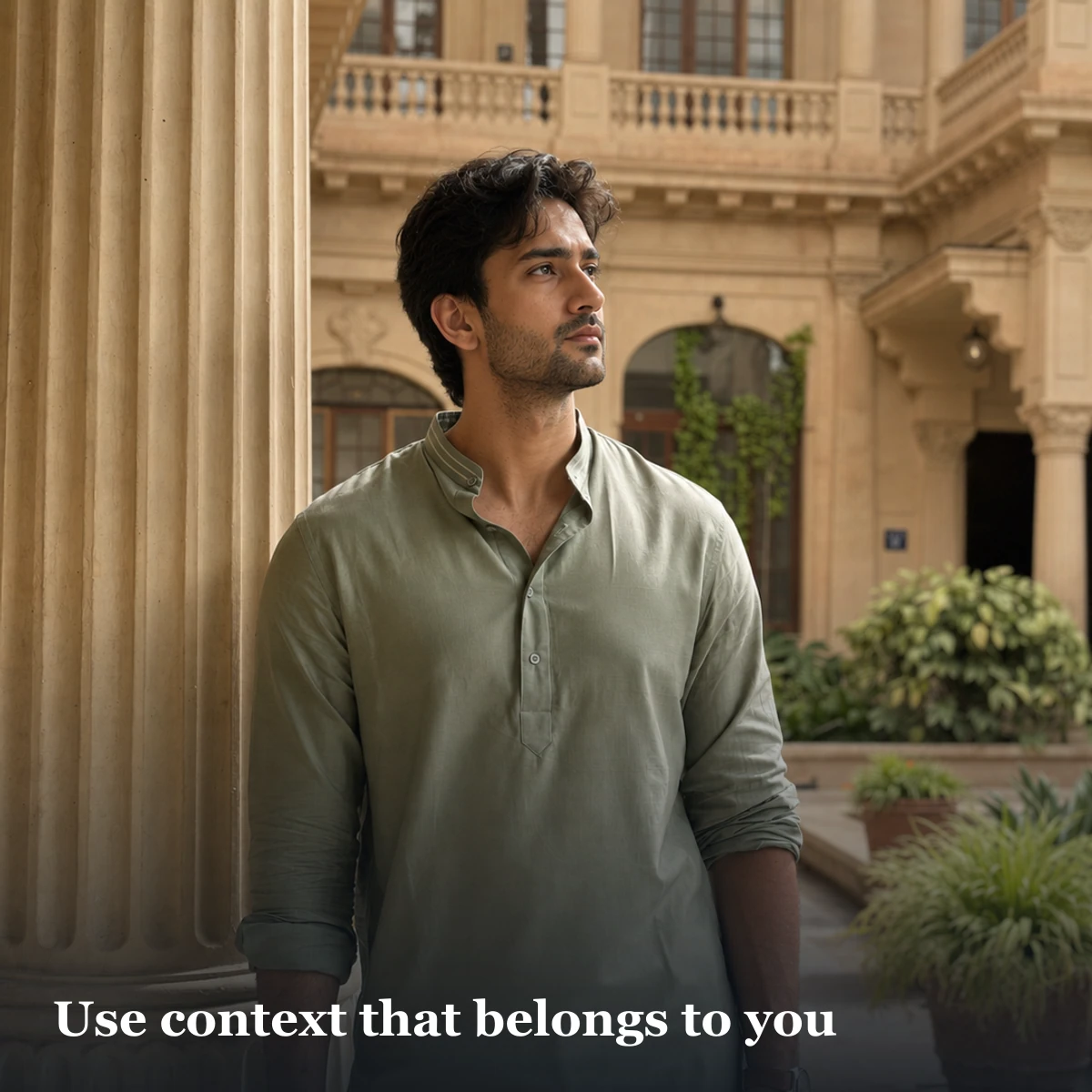
Use a truth gate for AI-generated backgrounds
An AI background can preserve your face and still make a false claim. Reject the image if it implies that you own the car or house, visited the destination, belong to the club, attended the event or work for the employer when none of that is true. Photorealism does not make the context honest.
- Name the place: what would you say if a match asked where this was?
- Name the implication: what property, trip, work or lifestyle claim might a stranger infer?
- Check identity: would somebody who knows you recognise the face, body and current appearance?
- Check safety: does the scene reveal or invent private information?
- Decide: if the truthful explanation needs a disclaimer, use another background.
The same test applies to a real photograph that is staged to imply false status. Read the Matchframe authenticity rubric before publishing a generated or heavily altered scene.
A 30-minute route with three nearby backgrounds
- Minutes 0 to 8: make the solo opener in open shade with a simple background.
- Minutes 8 to 16: walk to a second angle for half-body and full-body movement frames.
- Minutes 16 to 24: use one familiar cafe, bench, court or activity area for everyday context.
- Minutes 24 to 28: review focus, face size, private details and repeated poses.
- Minutes 28 to 30: reshoot the weakest role rather than adding another near-duplicate portrait.
Three nearby backgrounds with different jobs are enough. Use the India-aware clothing guide to keep colour and setting from competing, and stop the outdoor shoot when weather or heat makes the plan unsafe.
Local does not mean stereotyped
An India-specific page should not turn every photograph into monuments, wedding clothes or luxury hotels. Everyday credibility can come from a shaded neighbourhood street, metro-adjacent public space, terrace, court, bookshop, seafront or cafe that the person actually uses. The useful local difference is light, weather, crowding, privacy and cultural context, not decorative clichés.
In Mumbai or other coastal cities, humidity can make a lens smear more visible. In Delhi and many inland cities, seasonal light and air conditions can change colour and contrast. In Bengaluru and monsoon regions, plan a fully indoor fallback instead of depending on a perfect outdoor window. These are planning examples, not fixed rules for every day or city; check the actual forecast and conditions.
Run a location safety scan
Turn around before shooting. Remove office badges, apartment names, registration plates, QR codes, school uniforms and private event signage. Avoid publishing the exact corner used in a daily commute. If a generated background looks international or unusually expensive, ask what a stranger would reasonably infer from it and reject the frame when that inference is false.
Sources and method
- Bumble: Uploading profile photos and videos, updated 7 September 2026 and checked 9 September 2026.
- Bumble: What its data says about adding photos, updated 19 March 2026 and checked 4 September 2026. Platform data is not treated as causal proof.
- Tinder Photo Enhance, updated 15 June 2026 and checked 4 September 2026.
- Tinder Community Guidelines, checked 4 September 2026.
- India Meteorological Department thunderstorm safety, checked 4 September 2026.
- India Meteorological Department heat-wave safety, checked 4 September 2026.
- Matchframe authenticity and context rubric, updated 26 August 2026.
- Matchframe editorial method. Location choices and the 30-minute route are editorial heuristics, not match-rate claims.
Frequently asked questions
What is the best background for a dating-profile photo in India?
For the first photo, use a familiar, uncluttered place with usable light where your face stays obvious at card size. Later photos can add a truthful cafe, activity, occasion or outdoor setting.
Should I use a luxury background?
Only when it truthfully belongs to the moment. A background that implies false property, travel or status is misleading.
Are indoor or outdoor dating-profile backgrounds better?
Neither is automatically better. Use a mix only when every scene adds a distinct, truthful fact and keeps your face clear.
How should I plan dating photos during monsoon weather?
Check the current forecast and move indoors when thunder is heard. A bright indoor or fully enclosed fallback is safer than trying to finish an outdoor shoot during a thunderstorm.
Is it safe to use a photo taken at home?
It can be, but remove house numbers, windows showing a precise location, documents, screens and other identifying details before shooting.
Can I use an AI-generated background in a dating photo?
Only if it does not invent property, travel, work, event or lifestyle context. If you could not answer a simple question about the scene honestly, use another background.
Build an India-first photo library
Choose portrait, everyday, activity and occasion scenes without inventing a different life.
Open MatchframeAlso worth reading
- Ask a friend to take dating-profile photos
A copyable request and twenty-minute shot plan - Audit your dating-profile photos
A private keep, repair or replace decision tool - How Matchframe researches and checks its guides
Evidence rules, AI assistance, comparisons, updates and corrections - Jay Patel, Matchframe writer
Author profile, evidence boundaries and corrections