Dating-photo wardrobe guide
What men should wear in dating profile pictures
Guidance and sources checked 4 September 2026 · by Muskan Singh · Editorial method
Choose three or four current outfits that pass four checks: they look like clothes you really wear, fit while you stand and sit, remain clear at dating-app card size, and belong in the photographed setting. For the first photo, use a simple neckline and enough contrast from the background to keep your face easy to find. There is no proven universal “best colour” or brand for getting matches.

Use the four-test outfit check
This is an editorial release test, not an attractiveness score. An outfit can be stylish in person and still fail as a dating-profile image because the background, crop or lighting makes it unreadable. It can also photograph clearly but fail the truth test because it suggests a life you do not live.
| Test | Pass when | Replace or reshoot when |
|---|---|---|
| Truth | You own or plausibly wear it now | It creates a borrowed identity, occupation or status |
| Context | The clothes belong in the activity and place | A formal, gym or traditional look appears as a costume |
| Fit and movement | You can stand, sit and move without pulling or bunching | The pose exists only to hide a fit problem |
| Card-size clarity | Face, neckline and body outline remain easy to read | Pattern, logo, shadow or background swallows the subject |
Pass all four. “Photogenic” is not permission to misrepresent yourself, and “authentic” does not rescue a photograph in which the person cannot be seen.
What should you wear in the first photo?
Make recognition the first job. A plain T-shirt, polo, knit, shirt or simple layer can all work when the neckline is tidy, the face is unobstructed and the upper body separates from the background. The item does not need to be expensive. A clean garment you wear regularly is usually a safer representation than a new look bought only for the shoot.
Do not begin with a rule such as “wear navy” or “never wear black.” Begin with the actual scene. A dark top may hold a clear outline against a pale wall and disappear against a dark doorway. A pale shirt may look clean in shade and lose detail in hard sunlight. Take a test frame, view it at the size it will appear in the app and choose the version in which the face is easiest to locate.
Avoid making a large slogan, tiny high-contrast pattern or status logo the first thing the eye reads. A cap or sunglasses can be truthful personal style, but the opening image should still show the eyes and enough of the face for recognition.
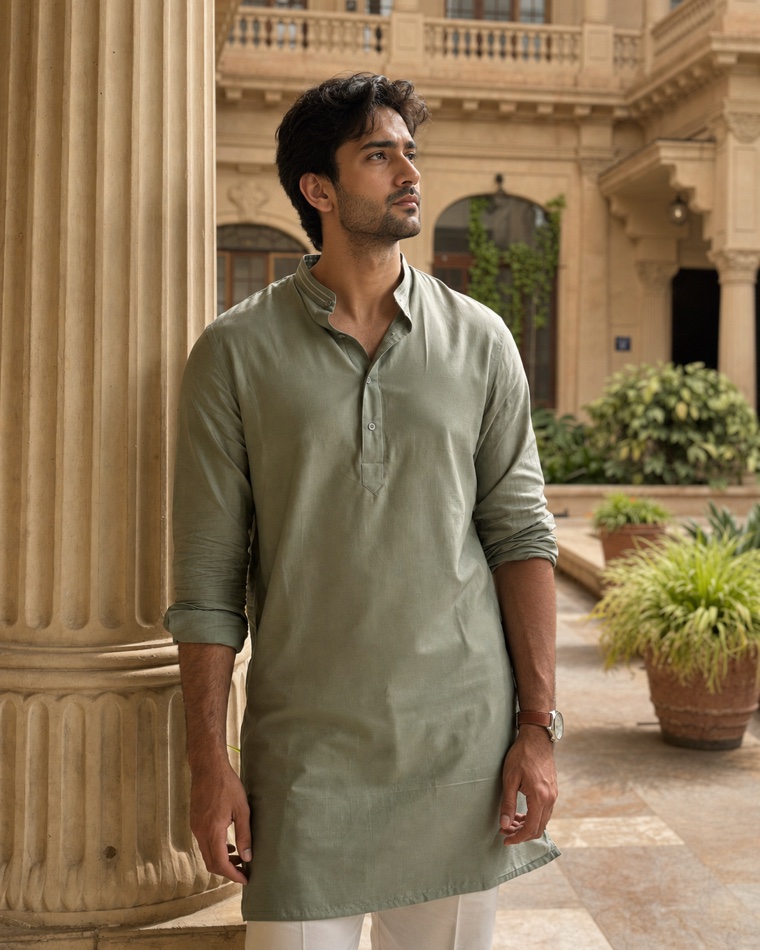
No, research does not prove one best clothing colour
Colour advice online is often presented as if a shirt colour directly produces matches. The evidence does not support that certainty. A 2015 re-examination of a well-known “men in red” effect ran two small experiments with 89 and 32 women and did not find a significant red effect. One experiment found a formal-clothing difference, but it was not a live dating-app test and did not measure swipes, matches, conversations or dates.
That means claims that a red shirt increases matches, that black is always second best, or a precise percentage loss for branded clothing should not be treated as rules unless the publisher shows a relevant, reproducible study. Use colour for practical separation, accurate skin exposure and personal continuity. Those are visible in your own frame; a universal attraction formula is not.
Run the actual card-size test
- Photograph the outfit in the planned location and light.
- Crop it the way the dating app is likely to display it.
- View it small on a phone rather than judging only a full-screen original.
- Check whether the face is found first and both shoulders retain an outline.
- Zoom in once to inspect repeated patterns, warped text, clipped highlights and blocked shadows.
Fine stripes and checks can produce distracting moiré after resizing. White fabric can lose texture when the face is correctly exposed; black fabric can lose shape in shade. These are capture problems, not moral judgments about the clothes. Move the person, background or light before buying a different wardrobe.
How should clothes fit in photographs?
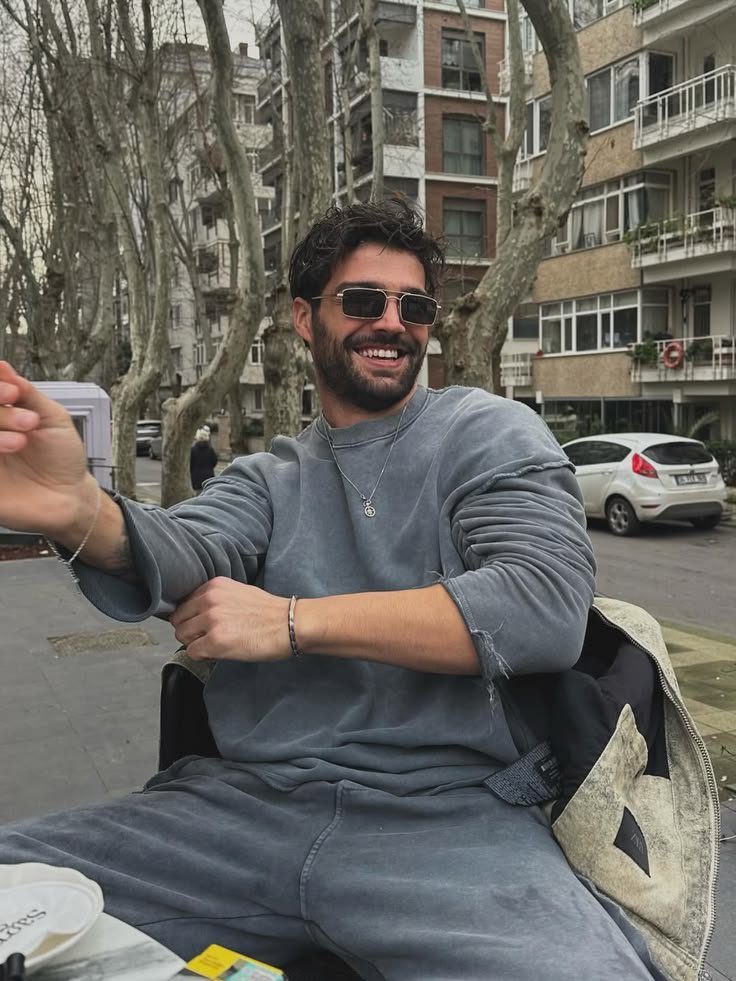
Use movement rather than a body-type rule. Put on the complete outfit, then stand, sit, reach and walk. Shoulder seams should remain near the shoulder; buttons and zips should not pull open; sleeves and trouser hems should not bunch so heavily that they dominate the frame. Steam large accidental creases, clean visible marks and empty pockets that create hard rectangular bulges.
This is not a direction to wear tighter clothes or hide a body. The correct fit is the one that lets the person move normally and still resembles how the outfit is worn in real life. If a jacket looks good only while held shut or a shirt works only from one rigid angle, choose another item or have the fit adjusted.
How many outfits should a dating profile show?
For a six-photo set, three or four outfits usually create enough context without making every image look like a different year or a single studio session. This is an editorial starting point, not a platform rule. Current Tinder photo guidance describes variety across activities, settings and poses, while Bumble suggests showing interests and recent moments. Neither source publishes a clothing ranking formula.
| Photo role | Useful starting outfit | Truth check |
|---|---|---|
| Clear opener | Simple tee, polo, knit or shirt with visible neckline | Would a date recognise this as your normal presentation? |
| Everyday context | Overshirt, casual shirt, jeans or chinos | Is this a place and combination you actually use? |
| Activity | Real clothing and safety gear required by the activity | Can you genuinely do the activity shown? |
| Smart occasion | Well-fitting shirt, jacket or suit where the event supports it | Is the event real rather than a staged luxury claim? |
| Traditional dress | Kurta, bandhgala or other clothing you wear for real occasions | Does it represent your culture and actual life rather than a costume? |
| Seasonal or travel | Weather-appropriate layers | Is the photograph recent enough to represent you now? |
How should men in India plan outfits for heat?
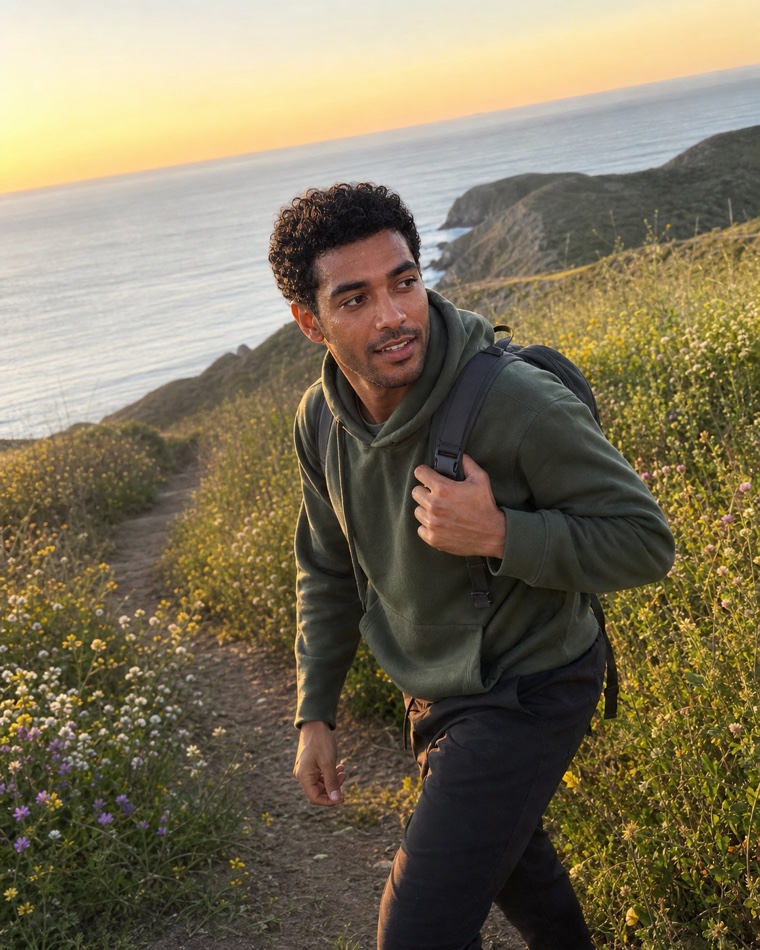
Choose the shoot plan for safety first. The India Meteorological Department's heat-wave guidance recommends lightweight, light-coloured, loose cotton clothing, water, shade and avoiding strenuous outdoor exposure during the hottest part of the day. This is public-health guidance, not evidence that light colours attract more matches.
For an outdoor photo, schedule early or later light, keep water nearby and shorten the session. If heat changes posture, expression or comfort, move indoors. A blazer that looks appropriate at an air-conditioned dinner does not need to be worn on a hot street to prove that you own one.
Can you wear traditional or formal clothes?
Yes, when the image explains itself. A wedding, festival, family celebration or real formal event can show an important part of life. Keep one photograph where the setting and clothing agree. Do not turn every frame into occasion wear if that is not how you normally appear, and do not generate medals, uniforms, luxury venues or cultural details you did not earn or understand.
A suit is useful only when it fits and belongs to the scene. A corporate headshot crop may communicate work but reveal little about everyday life. Balance it with a current casual or activity photograph rather than assuming formality is universally more attractive.
What about patterns, logos and accessories?
Small patterns are a technical test: photograph them and inspect the resized file for shimmer or moiré. Logos and text are an attention test: if they become the main message, use a quieter item. Neither needs a blanket ban. The same applies to a watch, chain, ring, turban, cap or glasses. Keep what is genuinely yours and make sure it does not prevent recognition.
Use sunglasses in at most one contextual image unless they are medically needed. The first clear portrait should normally show the eyes, and the rest of the set should not repeat the same hidden-face problem. Remove keys, bottles and borrowed brand props when their only role is to imply money or status.
Run a controlled two-outfit capture test
If two outfits seem equally truthful, test them without changing everything else. Use the same place, light, camera distance, crop and expression. Swap only the outfit. Compare the two images at card size for face priority, outline, exposure and context. Keep the clearer image and record why.
This is a production test, not an experiment on matches. It cannot prove which clothing causes attraction because real app outcomes also depend on the rest of the profile, audience, location, timing and platform systems. It simply stops wardrobe choice from being confused with a change in lighting or pose.
How should AI-generated outfits be checked?
Use the same four tests, then add an identity and artefact review. The outfit must be something you could plausibly wear, and the photograph must preserve current facial identity and body proportions. Inspect collars, buttons, hands, jewellery, logos, text, religious or cultural elements and reflections. Reject invented uniforms, awards, luxury settings and activities that would mislead a viewer.
Current Hinge policy prohibits misleading AI-generated content and fake identities. Tinder and Bumble likewise require authentic, permitted profile content. Technical enhancement is not permission to create a false biography. Matchframe's own AI dating-photo authenticity guide contains the full release checklist.
Complete the final wardrobe audit
- The opener shows the face and eyes clearly at card size.
- Every outfit is current, owned or realistically wearable by you.
- The set contains different contexts without changing identity or apparent age.
- At least one image shows an everyday version of you.
- Activity, traditional and formal clothing has a believable setting.
- No logo, pattern, shadow or highlight takes attention away from the person.
- No image invents an occupation, achievement, wealth signal or cultural context.
- The clothes and shoot conditions are safe for the weather and activity.
Review the full set beside the natural pose guide, the six photo-role planner and the dating-app crop guide. If an outfit fails, change only that variable and test again.
Sources and evidence limits
- Bumble: uploading profile photos and videos, updated 7 September 2026 and checked 9 September 2026. Used for current clarity, recentness and contextual-photo guidance; not a clothing ranking claim.
- Bumble: what its data says about adding photos, updated 19 March 2026 and checked 4 September 2026. First-party aggregate association, not a causal clothing test.
- Tinder Photo Tips, updated 26 August 2026 and checked 4 September 2026. Used for variety across activities, settings and poses; no clothing formula is published.
- Tinder Photo Enhance, updated 15 June 2026 and checked 4 September 2026. Used for the boundary between technical enhancement and appearance changes.
- Hinge prohibited content and behaviour, updated 29 June 2026 and checked 4 September 2026. Used for misleading AI and permission boundaries.
- Bumble Community Guidelines and Tinder Community Guidelines, checked 4 September 2026. Used for current public-profile safety and authenticity boundaries.
- Peperkoorn et al., “Men in red: A reexamination”, 2015. Two small experiments did not reproduce a significant red effect; not a dating-app outcome study.
- India Meteorological Department heat-wave guidance, checked 4 September 2026. Used only for outdoor-shoot safety.
Frequently asked questions
What should a man wear in his first dating profile photo?
Wear a current, familiar top with a simple neckline and enough contrast from the background for your face and shoulders to remain clear at card size. The item does not need to be expensive or a particular colour.
How many outfits should a dating profile include?
Three or four is a practical starting point for a six-photo set: an everyday look, a smarter outfit and real activity or occasion clothing. This is an editorial recommendation, not a dating-app rule.
What is the best shirt colour for a dating profile?
There is no proven universal best colour. Test the shirt in the actual light and background, then keep the frame where the face, neckline and body outline remain clearest at the app's display size.
Should a man wear a suit in dating photos?
A well-fitting suit can work in a genuine formal or professional context, but it should not replace an everyday photo. The setting and clothing should agree with the life you actually lead.
Can I wear traditional Indian clothing in a dating profile?
Yes. A kurta, bandhgala or other traditional outfit can show a real part of your life when the occasion and setting are believable. Do not treat cultural clothing as a costume or fabricate the event.
Are logos and patterns bad in dating photos?
Not automatically. Test small patterns for moire after resizing, and remove a logo or slogan when it becomes more noticeable than the person. This is a clarity check, not a universal ban.
Should men wear sunglasses in dating photos?
Sunglasses can appear once in a real outdoor context, but the first clear portrait should normally show the eyes and the set should not repeatedly hide the face.
What should I wear for dating photos in hot weather?
Plan for safety first: lightweight, loose clothing, water, shade and an early or later shoot are sensible in extreme heat. This is heat-safety guidance, not an attractiveness claim.
Can an AI dating photo change my clothes?
Only keep an AI-generated outfit if it is plausible for you, preserves your current identity and contains no warped logos, text, jewellery or cultural details. Reject invented uniforms, awards, wealth signals and false activities.
Good source photos, more useful settings
Matchframe uses your current identity to build a varied dating-photo set across casual, active and dressed-up scenes.
Open MatchframeAlso worth reading
- Tinder profile photos for men
Current Tinder tools, opener checks and flexible photo roles - Hinge profile photos for men
Four to six roles, prompt pairing, Top Photo and truth checks - Bumble profile photos for men
Four to six roles, Best Photo limits, prompts and truth checks - Matchframe vs DatePhotos.AI
Price, output, delivery, refunds and data retention