Tinder, Hinge & Bumble
Best dating app photos for men: 18 ideas for one balanced set
Guidance checked 4 September 2026 · by Muskan Singh · Editorial method
The best dating-app photos for men are not one universal pose. They are a truthful, current set that answers six different questions: what your face looks like, what your full appearance looks like, how you spend an ordinary day, what you genuinely enjoy, how you dress for an occasion and what makes it easy to start a conversation.

Find the one photo you should shoot next
Give every current photo one label: face, full length, everyday, activity, dressed or warm detail. A photograph gets only one label—the job it communicates clearly at phone-card size.
Decision rule: shoot the first missing role. If all six exist, replace the weakest duplicate rather than adding another near-identical portrait. This is a planning tool, not an app-ranking score.
What makes a dating-app photo good?
A good photo does one useful job without creating a false impression. At normal phone size, a stranger should be able to recognise you, understand the scene and learn something that the other photographs do not already show. The set should look like one current person living one plausible life—not six advertisements for the same face.
| Check | Keep the photo when | Replace it when |
|---|---|---|
| Recognition | Your face and eyes remain easy to identify on a phone | You are distant, hidden, blurred or one of several possible people |
| Recency | Hair, facial hair, body and apparent age still look current | It represents a version of you a date would not meet now |
| Distinct job | It adds body, setting, activity, dress or personality information | Another photograph already says the same thing more clearly |
| Readable context | The activity is obvious without a long caption | The frame looks staged, confusing or visually busy |
| Truth | The people, pet, place, possession and activity are genuinely connected to you | The image implies a life, relationship or achievement that is not yours |
The six useful photo roles
| Role | What it proves | Easy version to make |
|---|---|---|
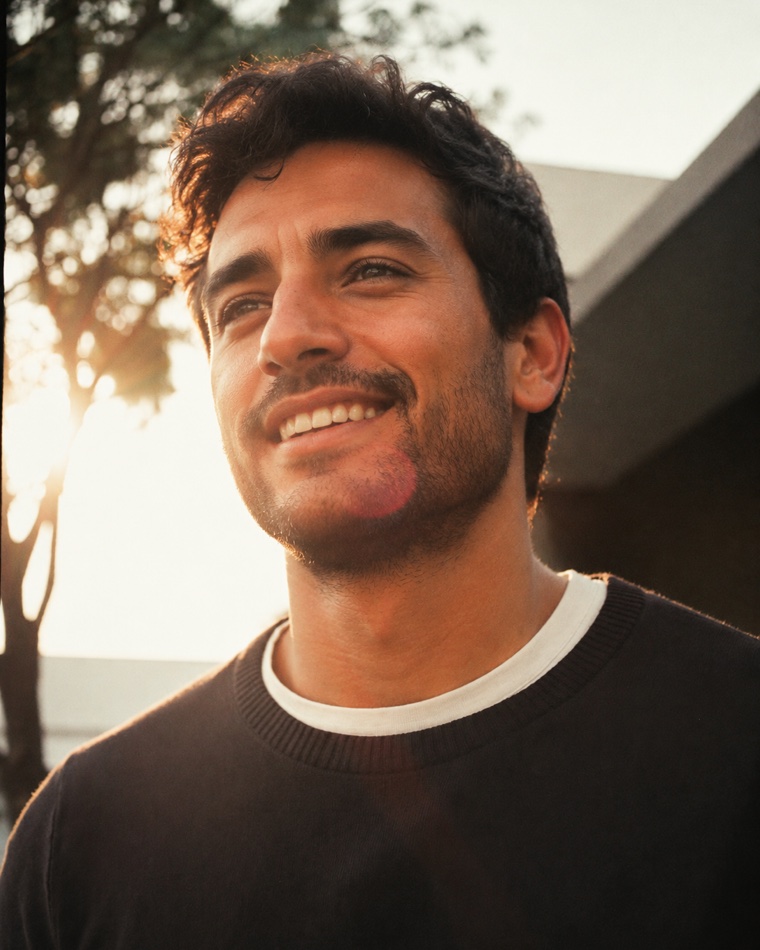
| Clear first portrait | Your face is easy to identify | Window light, eye-level camera, chest-up crop |
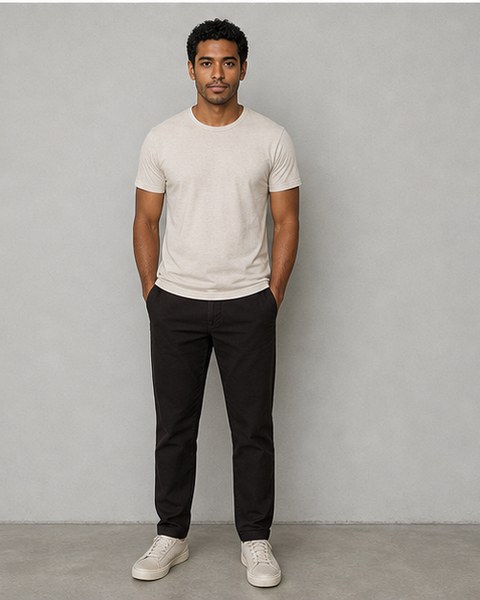
| Full length | No missing information | Rear camera on a timer outdoors |
| Everyday context | What being around you might feel like | Café, walk, bookstore, cooking |
| Activity | A real interest and an opening question | Sport, instrument, hike, making something |
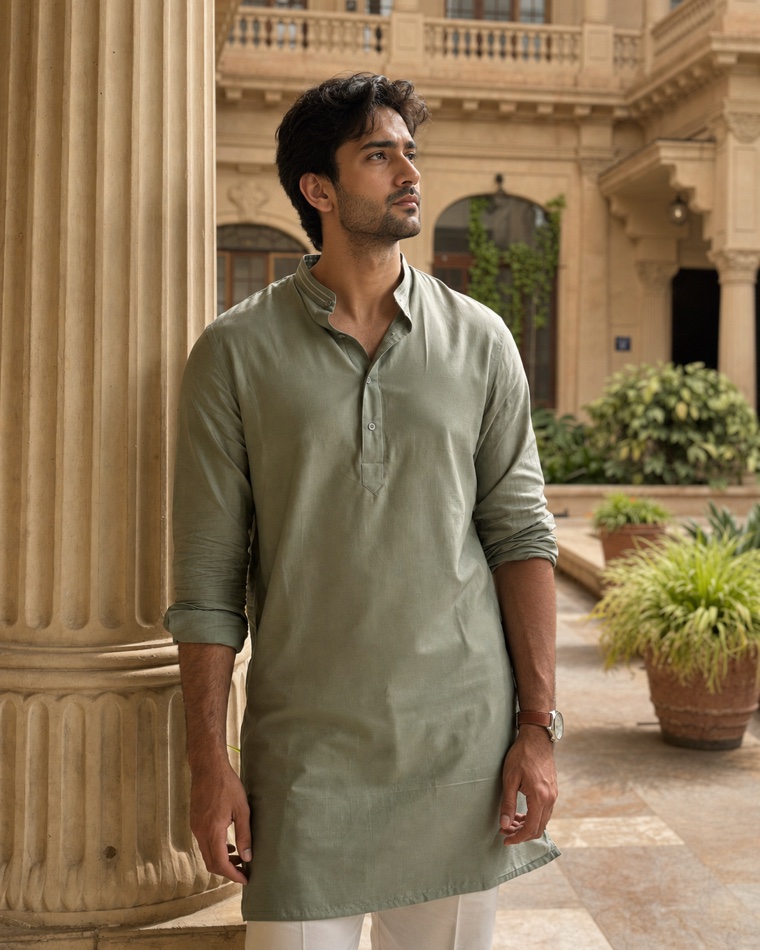
| Dressed up | Range beyond casual clothes | Wedding, dinner or traditional occasion |
| Social or warm detail | Connection and personality | Friends later in the set, or a pet you actually know |
18 dating-app photo ideas you can actually make
Choose one idea from each role. Do not use all 18, and do not recreate an idea that is unrelated to your real life. A simple photograph with believable context is more useful than an elaborate scene you would have to explain away.
1. Clear first portrait
- Window-light portrait: stand at roughly a 45-degree angle to a large window, keep the camera near eye level and leave space around your head for app crops.
- Open-shade portrait: use the shade beside a building or under a covered walkway so your eyes are visible without harsh overhead shadows.
- Walk-and-pause portrait: have a friend take a short burst while you walk, then pause and look towards the camera. Select the relaxed frame, not the mid-step blur.
2. Full-body context
- Neighbourhood walk: stand or walk on a familiar, uncluttered street with the full outline of your body visible.
- Simple seated frame: sit naturally on a bench or low wall while keeping hands and posture visible; avoid a crop that cuts at awkward joints.
- Everyday outfit check: use a timer and rear camera before leaving home. Show the complete outfit in clean light rather than using a mirror selfie.
3. Ordinary life
- Café table: choose a café you really visit, sit near daylight and include enough of the table to make the setting clear without hiding behind a cup.
- Cooking something familiar: photograph a real dish while you prepare or plate it; the action matters more than a spotless showroom kitchen.
- Bookshop, market or neighbourhood stop: use a place that fits your routine and gives a match a specific detail to ask about.
4. Real activity
- Before or after a sport: show the equipment and location, but keep your face readable. Do not make every image a distant action shot.
- Instrument, craft or project: photograph the part where your hands are naturally occupied instead of staring at the camera while holding a prop.
- Walk, hike or day trip: include recognisable context only when it is somewhere you actually went; keep at least one frame close enough to identify you.
5. Dressed for an occasion
- Dinner or event arrival: take the photo before the room gets dark or crowded, when clothes are neat and the background is still readable.
- Wedding-guest photograph: crop to make you unmistakable and keep other people only with their permission. Do not lead with a large group.
- Traditional or cultural occasion: use a real celebration and accurate caption context rather than generating an event you never attended.
6. Warm or social detail
- Your own pet: use a calm moment where both you and the animal are comfortable. Do not borrow an animal merely as a dating prop.
- One friend, later in the set: choose a frame where you are immediately identifiable, obtain permission and never make a match guess which person owns the profile.
- Hosting or sharing food: a candid frame from a real gathering can show warmth without exposing a room full of people who did not consent to appear.
Build a six-photo plan in ten minutes
- Inventory what already exists. Put every current, usable photo in one album. Remove screenshots, heavy filters, old appearances and near-duplicates.
- Label the roles. Mark portrait, full body, everyday, activity, dressed and warm/social. One photo can cover two roles, but the final set still needs variety.
- Identify the missing role. Plan only the next photograph you actually need instead of arranging a six-scene photoshoot.
- Write a one-line brief. Record location, activity, outfit, light and who will take it. Example: “Saturday café, reading by the window, blue overshirt, one friend, ten-minute burst.”
- Compare at phone size. Make a screenshot-sized contact sheet and remove anything that becomes unclear, repetitive or misleading.
If nobody is available, use the solo timer and tripod workflow. If asking feels awkward, use the five-minute friend brief instead of pretending the shoot is for something else.
For Tinder
Tinder's own Photo Selector looks for elements such as lighting and composition and filters out group photos from its recommendations. Treat that as a clue about clarity, not a secret ranking formula. Lead with a solo photo that survives a fast, small-screen scan; move groups and distant travel frames later. Tinder's current Photo Tips, available only in select markets, also evaluates the uploaded set for variety in activities, settings and poses and can flag similar photos. Tinder says it may use profile details such as a bio and Interests to make suggestions more relevant. This is product guidance, not evidence of a ranking formula.
Practical lineup: open with the clearest solo portrait, then add full-body context, ordinary life and an activity before any group frame. If two images share the same crop, clothes, expression and background, keep the one that reads better on a small screen.
For Hinge
Hinge requires four to six photos depending on local requirements, alongside three prompt answers. Its Top Photo feature can test which uploaded photo is most likely to receive a Like and place it first. Give it several genuinely strong candidates rather than one clear portrait and five fillers.
Because a Like can attach to a particular photo or prompt, context matters: an activity, food, place or ordinary detail can give someone something specific to say. Hinge says its Convo Starters do not appear on selfies or group photos, another reason to include more informative frames.
Practical lineup: use several clear solo candidates rather than protecting one “hero” image with fillers. Put specific, commentable context beside prompts that add different information; a photograph of a real meal, place or project is more answerable than a generic scenic view.
For Bumble
Bumble's photo-feedback guidance, updated 3 September 2026, gives examples that recommend variety, hobbies, clearer images, a solo first photo, fewer mirror selfies, fewer duplicate images and visible eyes. Bumble says this AI-powered feature is being tested, its suggestions are advisory and only the member sees them. It analyses general visual elements rather than recognising a face. Use the checklist as an editing aid, not as a claim about Bumble's ranking system.
Practical lineup: start solo, keep the eyes visible and make the next photographs meaningfully different in setting, pose or activity. Treat feedback as a prompt to inspect the image yourself, not an automatic order to replace a truthful photograph.
Use one set across apps without making every profile identical
| Decision | Tinder | Hinge | Bumble |
|---|---|---|---|
| First priority | Immediate solo recognition | Several strong candidates for Top Photo | Solo clarity and visible eyes |
| Middle of set | Range in body, setting and activity | Specific context that can receive a comment | Different hobbies, settings and poses |
| Group photo | Later, if still clear | Later, and not useful for Convo Starters | Later, with unmistakable identity |
| What not to infer | Photo guidance is not a ranking formula | Top Photo is not a guarantee of Likes | Private feedback is not a performance score |
Can men use selfies?
One current selfie can be useful when it is clear, well lit and not distorted by a very close wide-angle camera. The problem is repetition: six arm-length images usually provide little body, activity or social context. Keep a strong selfie only if it fills a real role, then use a timer, tripod or friend for the missing frames.
What size should dating-app photos be?
Do not build the whole set around one remembered pixel number. Apps can change their upload and display behaviour. Keep a high-resolution master, leave crop room around the head and body, and preview each image as a portrait card, square thumbnail and full-screen view. The dating-photo crop guide explains the safe-master workflow and current app checks.
Ideas that look good but weaken trust
- A first photo with several equally prominent people.
- A generated luxury setting that is not part of your life.
- Six photographs with different faces, body proportions or apparent ages.
- Only formal headshots, with no ordinary context.
- Old images that no longer match your current appearance.
Order the profile as a story
Start with recognition. Add body and everyday context. Use the middle for activity and personality. Finish with a frame that creates a question or shows a different register. The sequence should feel like six moments from one person's life, not six advertisements for a face.
The final phone-screen check
- You are unmistakable in the opener without zooming.
- At least one frame shows your current full appearance.
- No two photographs repeat the same crop, outfit, background and expression.
- Every person and pet shown has a truthful relationship to you and appropriate permission.
- An activity photo shows something you actually do, not a borrowed prop.
- No generated setting implies a trip, property, job, achievement or lifestyle that is not yours.
- The set still looks like one person when viewed as small thumbnails.
Official app sources
- Tinder Photo Selector, updated 7 August 2026 and checked 4 September 2026.
- Tinder Photo Tips, updated 26 August 2026 and checked 4 September 2026.
- Hinge: How do I edit my profile?, updated 30 July 2026 and checked 4 September 2026.
- Hinge Top Photo, updated 29 June 2026 and checked 4 September 2026.
- Hinge Convo Starters, updated 7 August 2026 and checked 4 September 2026.
- Bumble photo feedback, updated 3 September 2026 and checked 4 September 2026.
Frequently asked questions
Can I use the same photos on Tinder, Hinge and Bumble?
Yes. Build one current, varied core set, then adjust the order and contextual choices for each app.
What photo should men put first on a dating app?
Use a current solo portrait with a clearly visible face, readable eyes and enough crop margin for a small-screen card.
What six photo roles should a dating profile include?
Use a clear portrait, full-body frame, everyday context, real activity, dressed occasion and one truthful social or warm-detail image.
What are good dating-app photos for men?
Good dating-app photos are current, easy to recognise on a phone and different from one another. Each should add useful information about your appearance, ordinary life, interests or social context.
Can men use selfies on dating apps?
Yes, if a selfie is current, clear and not distorted. Avoid filling the whole profile with arm-length photographs because they repeat the same crop and provide little body, activity or social context.
How can men take dating-app photos without a photographer?
Use a rear camera with a timer or remote, stable support, open shade or window light and short bursts. Plan one missing photo role at a time rather than staging an entire fake day.
What size should dating-app photos be?
Keep a high-resolution master with crop room around the head and body, then preview it as a portrait card, square thumbnail and full-screen image. Recheck each app's current upload behaviour before posting.
Should a dating profile include a group photo?
A group photo can appear later in the set when you are immediately identifiable and everyone shown has appropriate permission. Do not use it as the first photo or make viewers guess who owns the profile.
Need the full set, not one more selfie?
Matchframe produces portraits, full-body frames, everyday moments, activity and evening photos from one private identity.
Open MatchframeAlso worth reading
- Are AI dating photos catfishing?
The recognition test and current Tinder, Hinge and Bumble guidance - AI dating photos vs a photographer in India
Cost, effort, realism and when each choice is better - AI dating photo apps in India: what they cost in rupees
Prices compared, plus the forex fees nobody lists - A HeadshotPro alternative for India
Headshots against dating photos, compared honestly