Profile lineup guide
How many photos should a dating profile have?
For most dating profiles, use four to six strong photos. Start with a current solo portrait and a current full-body view. Give every later photo one different job, such as everyday life, a real activity, social context or a dressed occasion. Do not add a weak duplicate merely to fill the final slot.
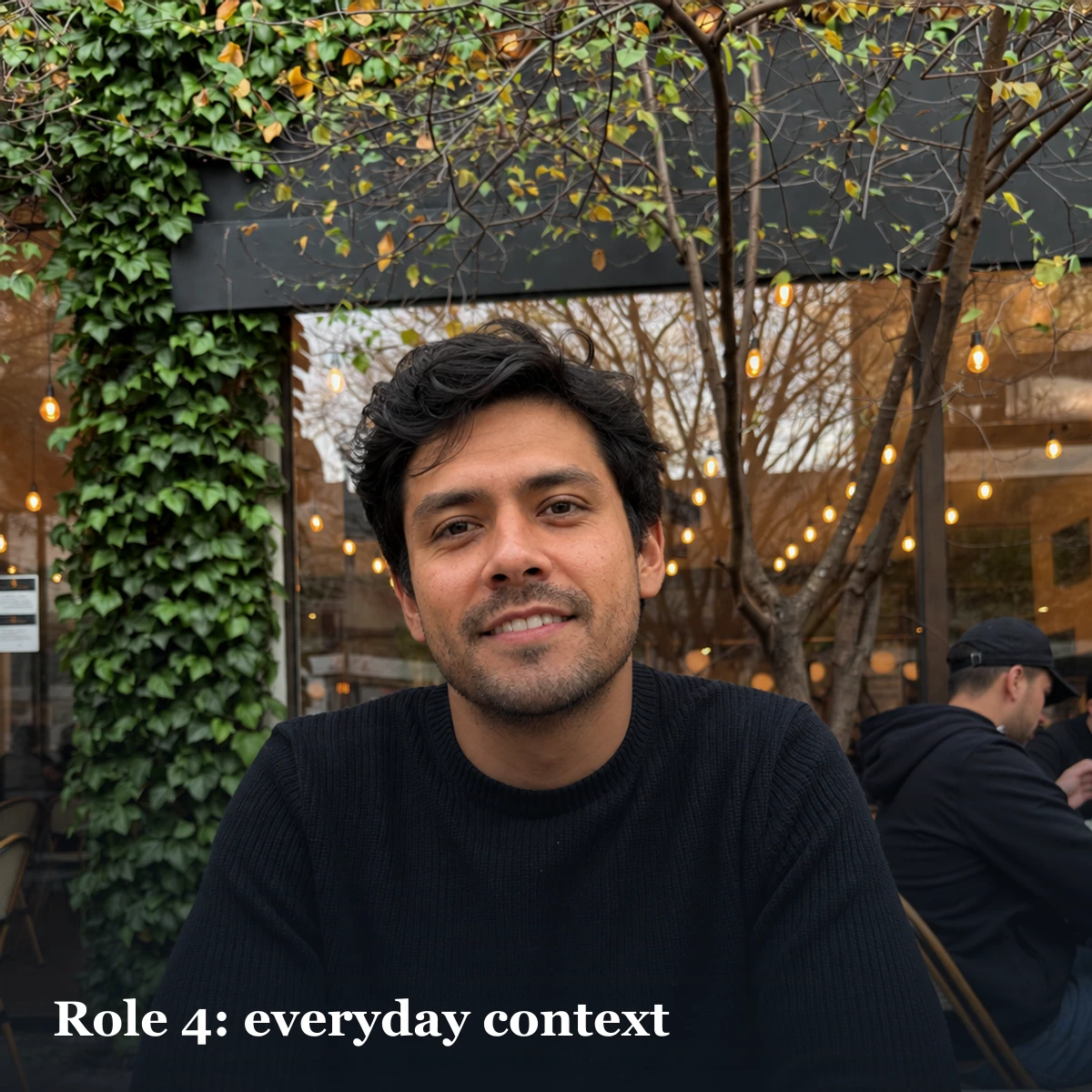
Does every photo add a new fact?
View the complete lineup at equal phone-card size. Give each image one primary label, then hide it.
Decision rule: meet the app's current minimum first. After that, remove a photo when hiding it loses no useful information. Create a missing role instead of filling the slot with an old, unclear or misleading duplicate. This is an editorial coverage test, not a match prediction.
The answer changes slightly by app
There is no verified universal number that unlocks more matches across every dating app. Current platform guidance supports a four-to-six range, but the reason and the requirement differ:
| App | Current published guidance | What to do |
|---|---|---|
| Hinge | Members need four to six photos, depending on local requirements, plus three prompt answers. | Fill the number required in your app. Make each photo answer a different question. |
| Bumble | You can upload up to six photos or videos. Bumble says four to six work best. | Use four to six media slots when every one remains clear, current and varied. |
| Tinder | A 2024 Tinder survey said most single women preferred men's profiles with at least four images. | Treat four as a research signal, not a permanent slot rule or guarantee. |
Bumble also reports that profiles with six photos were nearly twice as likely to receive likes as profiles with three in its aggregate platform data. This is an association reported by Bumble. It does not prove that adding three arbitrary photos causes more likes for one person.
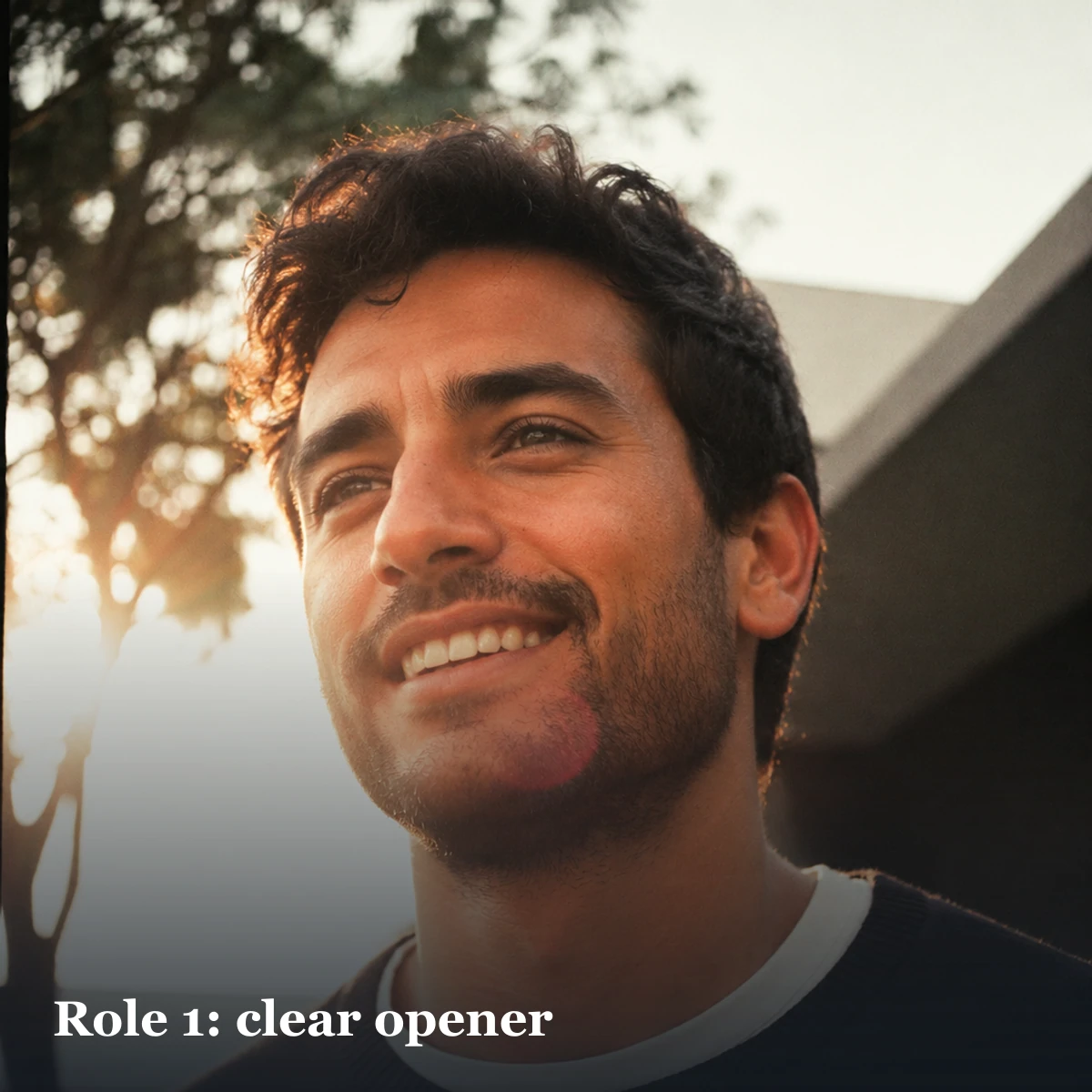
Build the first four roles before adding extras
A useful four-photo base answers four different questions. It does not need to look like a professional portfolio.
| Slot | Primary job | Pass condition | Common duplicate |
|---|---|---|---|
| 1 | Identity | Solo, current face is readable at phone-card size | Another tight portrait in different clothes |
| 2 | Appearance | Current full-body or useful three-quarter context | A distant frame where neither face nor body is clear |
| 3 | Everyday life | A place or routine you can explain honestly | A staged cafe portrait that repeats the opener |
| 4 | Real activity | The action and your identity both survive the crop | Standing beside equipment you do not actually use |
These are editorial roles, not app-ranking factors. A single photo can contain several details, but assign it the one job a stranger can understand without your explanation. If the intended role disappears at phone size, the photo does not perform that role in the profile.
Choose four, five or six without filler
| Count | Useful lineup | Stop or continue? |
|---|---|---|
| 4 | Identity, appearance, everyday life, real activity | Continue only if the app requires more or a new photo adds a missing role. |
| 5 | The four roles above, plus social context or a dressed occasion | Stop if photo six would repeat the same place, outfit, crop or story. |
| 6 | Six distinct roles, with one final warm detail or easy conversation route | Stop. Keep extra approved photos in reserve instead of expanding the live set. |
The fifth and sixth photos are not automatically weaker. They become filler when they repeat information, look outdated, hide your identity or imply a life you do not live. A genuine community event, familiar pet or different occasion can add useful context. A fourth version of the same posed portrait usually cannot.
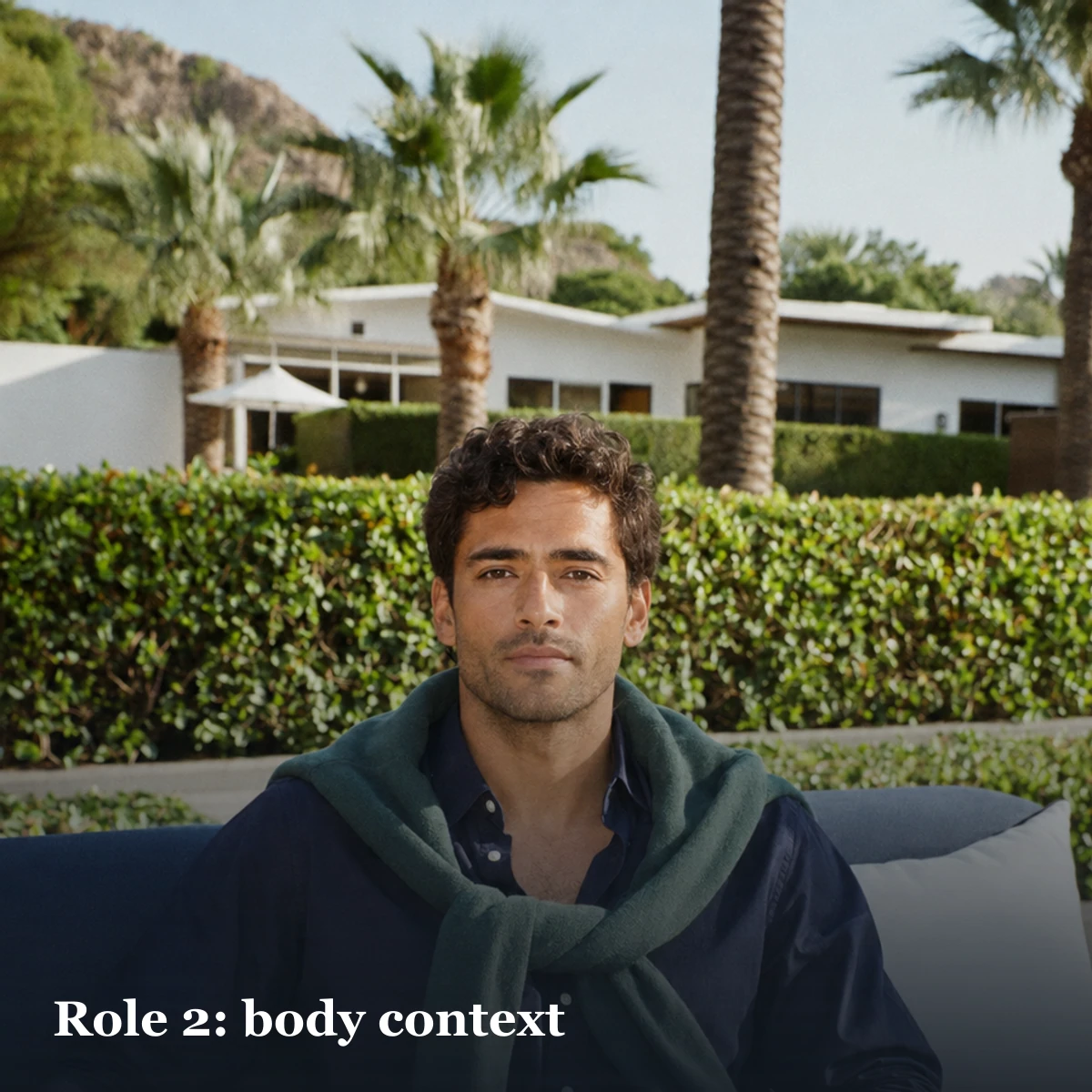
Use the remove-one test
Put the complete lineup on one screen at equal size. Write one short sentence under each photo: “this shows my current face,” “this shows my full appearance,” “this shows how I spend Sunday,” or another specific fact. Then hide one photo at a time.
- If no useful fact disappears, that photo is redundant.
- If identity or current appearance disappears, the set is incomplete.
- If a photo needs a long explanation, it is not communicating its intended role clearly.
- If the honest explanation changes the impression, replace the photo rather than rewriting the story.
This test does not score attractiveness or predict matches. It measures the information coverage of the set, which is the part you can inspect directly.
What if you have only three good photos?
Keep the three while you create the first missing role, unless the app requires more before the profile can be used. Do not solve a missing full-body photo with a second selfie or an old image. Ask a friend for a short rear-camera shoot, use a timer in open shade, or follow the twenty-minute friend shoot plan. The goal is not to stay at three. It is to avoid publishing misleading filler on the way to a complete set.
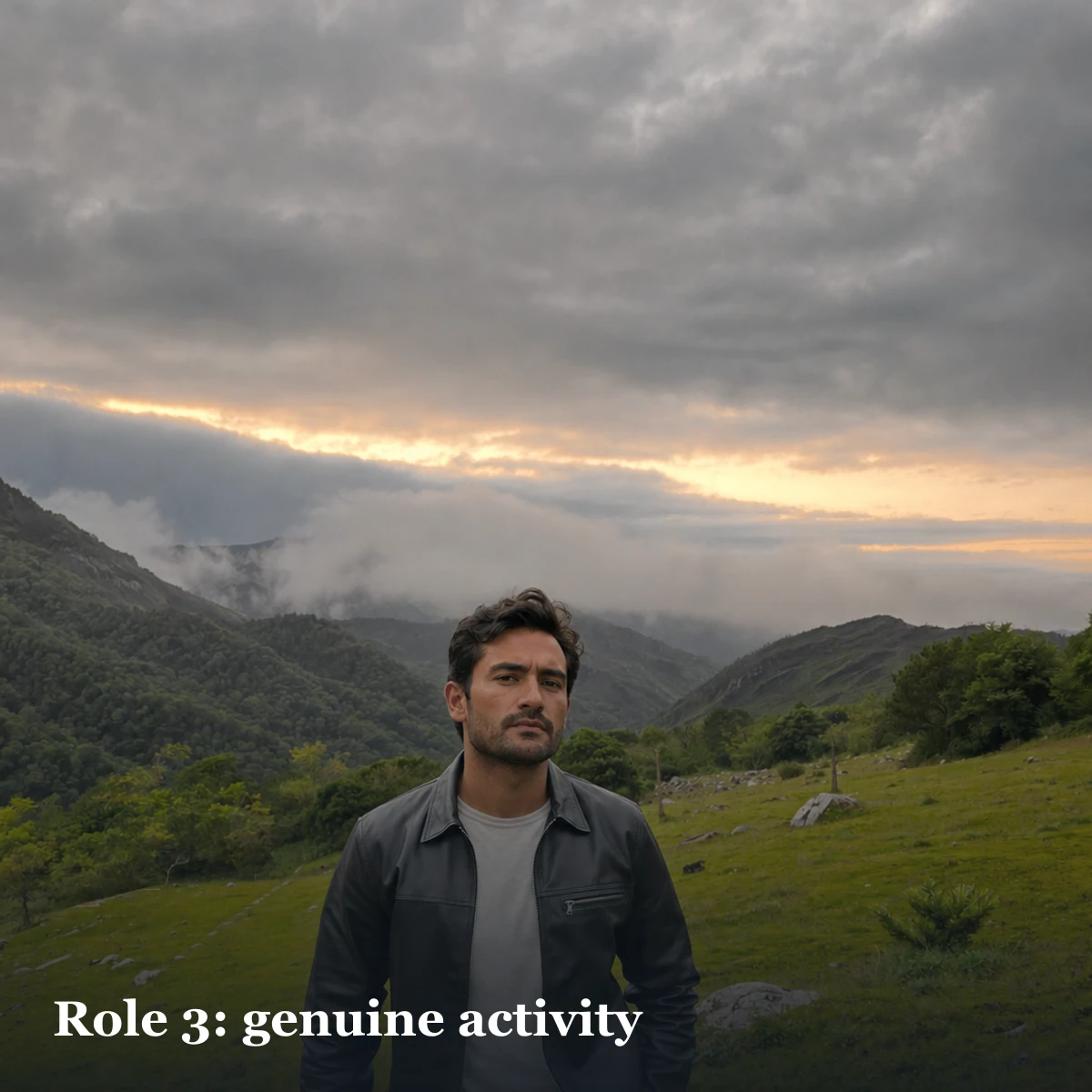
Should the profile mix AI and real photos?
No current source reviewed establishes a universal “best” AI-to-real ratio. Count truth and usefulness, not production method. A generated image still needs to match your current face and body, preserve normal features and depict a scene you can honestly use. A camera photo still fails when it is old, misleading or too unclear to identify you.
Keep a real photograph when it captures specific context that generation would invent, such as your actual team, pet, home activity or event. Use a generated option only when the identity and scene survive the same truth checks. Neither type earns a slot merely because it is real or generated.
Do videos count as profile photos?
Bumble's current guidance describes up to six photos or videos, so a video uses part of that six-item media allowance there. Do not assume every app counts media in the same way. Check the current editor in the app you use. A video can add movement or voice, but it does not remove the need for at least one clear, current still image that identifies you immediately.
Keep the set current after publishing
Save two or three approved alternatives outside the live profile: another opener, another activity and a seasonal or dressed frame. Record roughly when each was taken. Replace a photo when hair, beard, glasses, body or another recognisable feature has changed enough that the old lineup creates the wrong expectation.
Selection tools can help reorder candidates, but they do not make an incomplete set complete. Tinder's Photo Selector and Bumble's Best Photo still leave the person responsible for recency, permission and scene truth. For ordering help, use the dedicated first-photo chooser and the current Tinder, Hinge and Bumble guides.
Watch for role collisions
A cafe portrait can count as identity or everyday context, but it rarely needs to count as both. If it is tightly cropped, it says little about the setting. If it is wide, it may be too small for the opener. Assign the role based on what survives at app size, not what you remember from the original file.
Outfit changes are not enough to separate roles. Four studio-like portraits in different shirts still communicate one thing. Conversely, two images in the same outfit can be useful when one is a clear face and the other records a real activity, although visual repetition should still be checked.
Maintain a reserve set
Keep two or three approved alternatives outside the live profile: another opener, another activity and a seasonal or occasion frame. This lets you replace a weak role without filling the slot with the nearest camera-roll image. Record when each was taken and retire it when hair, beard, weight, glasses or other recognisable features have materially changed.
App requirements and experiments change. Recheck official product guidance before publishing a fixed number as a rule. The editorial recommendation here is about information coverage, not a claim that an app algorithm rewards six uploads.
Sources and method
- Hinge: How do I edit my profile?, updated 28 July 2026 and checked 4 September 2026.
- Bumble photo-upload help page, updated 7 September 2026 and checked 9 September 2026.
- Bumble data about adding photos, updated 19 March 2026 and checked 4 September 2026.
- Tinder Photo Selector announcement and survey methodology, published 17 July 2024 and checked 4 September 2026.
The four-to-six recommendation and remove-one test are Matchframe editorial guidance built from current app requirements, published platform data and a role-coverage review. They have not been validated as predictions of likes, matches, conversations, dates or relationships. See the editorial method.
Frequently asked questions
How many photos should a dating profile have?
For most profiles, use four to six strong photos. Start with a clear current face and full-body view, then make every later photo add a different truthful part of your life.
How many photos should I use on Hinge?
Hinge says members need between four and six photos, depending on local requirements, plus three prompt answers. Follow the number shown in your app and avoid repeating a role.
How many photos should I use on Bumble?
Bumble permits up to six photos or videos and says four to six work best. Use all six only when every item remains current, clear and different.
How many photos should I use on Tinder?
A 2024 Tinder survey said most single women preferred men's profiles with at least four images. Treat that as a dated research signal, not a permanent slot rule or guarantee.
Is three photos enough for a dating profile?
Three strong photos are better than three strong photos plus weak filler, but the set may still be incomplete or below an app's requirement. Create the first missing role rather than adding a duplicate.
Should all six dating-profile photos be different?
Yes in purpose, not necessarily in outfit or location. Each photo should add a distinct fact such as identity, current appearance, everyday life, activity, social context or an occasion.
What is the best ratio of AI to real dating photos?
No current source reviewed establishes a universal best ratio. Keep any image only when it is current, recognisable, truthful and adds a useful role that the rest of the set does not.
Create enough range to choose well
Choose 40 or 100 results, then build a four-to-six-photo profile without duplication.
Open MatchframeAlso worth reading
- Should men smile in dating photos?
A practical expression matrix without fake statistics - Group photos on dating apps
Consent, placement and privacy rules - Should men use shirtless dating-app photos?
A policy, privacy, context and intention test - Should you use a dog photo on a dating profile?
A truth, welfare, identity and privacy decision